
A backyard greenhouse extends your growing season by months, protects tender plants from frost, and gives you a controlled space to start seeds, overwinter plants, and grow warm-weather crops year-round. A basic lean-to or freestanding hoop greenhouse can be built in a weekend for $200–$800 depending on size and materials. A more substantial wood-frame greenhouse with polycarbonate panels takes a long weekend but lasts for decades. This guide covers both.
What You’ll Need
Option A: Hoop Greenhouse (Simplest)
- PVC conduit or cattle panel hoops (1/2-inch or 3/4-inch)
- Greenhouse plastic sheeting (6-mil UV-resistant polyethylene)
- Rebar stakes (for anchoring hoops to the ground)
- Bungee cords or snap clamps
- Wooden base boards (2×6 pressure treated) — optional
Option B: Wood-Frame Greenhouse (More Durable)
- Pressure-treated 4×4 lumber (for corner posts and base)
- 2×4 lumber (for wall framing and rafters)
- Twin-wall polycarbonate panels (8mm thickness for most climates)
- Polycarbonate panel roofing screws with neoprene washers
- H-channel and U-channel trim (for polycarbonate panel edges)
- Door hinges, latch, and hardware
- Concrete or gravel (for foundation)
- Galvanized framing hardware (post bases, joist hangers, hurricane ties)
Safety and Precautions
- Check local building codes and permits before starting. Many jurisdictions require a permit for any permanent structure over 120 square feet. A small hoop greenhouse usually doesn’t require a permit; a wood-frame structure often does.
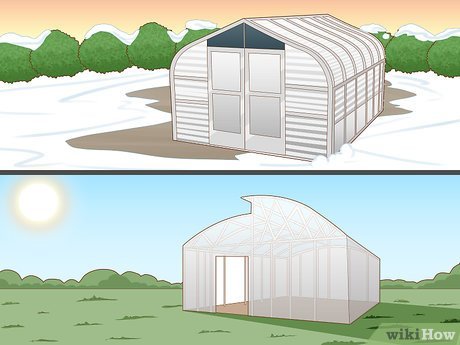
- Account for snow loads in your climate. Flat or low-pitch roofs in heavy-snow areas can collapse under snow weight. A steeper roof pitch (minimum 6:12 in heavy-snow zones) sheds snow better.
- Secure the structure against wind. A greenhouse acts as a sail — anchor the base securely and use hurricane ties on rafter-to-wall connections in high-wind areas.
- Call 811 before digging any post holes or foundation trenches.
- Polycarbonate panels are UV-protected on one side only — install with the UV-protected side facing outward (usually marked). Installing it backward causes rapid yellowing and brittleness.
Part 1: How to Build a Simple Hoop Greenhouse
Step 1 — Lay Out the Base
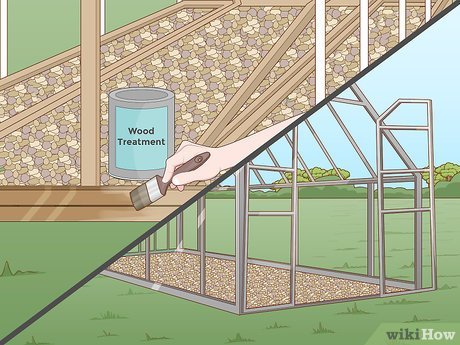
Drive rebar stakes into the ground at regular intervals along both long sides of your planned greenhouse footprint. For a 6-foot-wide greenhouse, space stakes 24 inches apart in pairs directly across from each other. The stakes should protrude 12 inches above ground. If using a wood base frame, build a rectangular pressure-treated 2×6 frame on the ground at your desired dimensions and anchor it to the ground with rebar driven through pre-drilled holes at the corners.
Step 2 — Install the Hoops
For each pair of opposing rebar stakes, slide one end of a PVC conduit or pre-bent cattle panel section over one rebar stake, then bend it over and slide the other end over the opposite stake. The arc height determines the interior ceiling height — for most backyard greenhouses, a 6-foot-wide base creates an apex height of approximately 4–5 feet with standard 10-foot conduit. Space hoops every 24 inches along the length of the greenhouse.
Step 3 — Install the Ridge Pole
Run a horizontal ridge pole (a straight length of PVC or conduit) along the top apex of all hoops, tying or clamping it to each hoop. This ridge pole locks all hoops into alignment and prevents the structure from racking side to side in wind.
Step 4 — Cover with Greenhouse Plastic
Unroll 6-mil greenhouse polyethylene plastic over the entire hoop structure, centering it so it hangs equally on both sides and both ends. Pull it taut from front to back. At the ends, cut the plastic and fold it to create walls — secure with snap clamps or bungee cords over the hoops, or staple to a wood end frame. Weight the base of the plastic on both sides with boards, sandbags, or secure it to the wood base frame with battens and screws. Leave one end unstapled as a door — roll it up and tie it when access is needed.
Part 2: How to Build a Wood-Frame Polycarbonate Greenhouse
Step 1 — Plan the Foundation
A permanent greenhouse needs a solid foundation. Options include concrete perimeter footings (poured below frost line), concrete piers, or a gravel pad. For most small-to-medium backyard greenhouses (8×10 to 12×16 feet), a pressure-treated wood sill plate anchored to concrete footings provides an excellent, economical foundation. The foundation must be level and square — all subsequent construction depends on it. Lay out the corners with batter boards and string, check for square with the 3-4-5 triangle method (a 3-4-5 foot triangle should have a perfectly square corner), and dig footing holes to the frost line depth for your area.
Step 2 — Build the Wall Framing
Frame the walls with 2×4 lumber: a bottom plate, a top plate, and studs at 24-inch on-center spacing. An 8-foot greenhouse wall gives comfortable head room. Frame the gable ends with a triangular section above the eave height to form the roof peak. Install a door rough opening in one end wall, framed to your door width plus 2 inches on each side and 2 inches above the door height. Pre-assemble wall sections flat on the ground and then tilt them up onto the foundation, plumbing and bracing each wall section before moving to the next.
Step 3 — Frame the Roof
Cut rafters to the planned roof pitch from 2×4 lumber. A 6:12 pitch (rises 6 inches for every 12 horizontal inches) provides good snow shedding and adequate interior headroom. Install a ridge board at the apex running the full length of the greenhouse. Attach rafters to the ridge board at the top and to the wall’s top plate at the bottom, using hurricane ties for secure connections. Space rafters at 24-inch on-center to match the recommended spacing for polycarbonate panels.
Step 4 — Install Polycarbonate Panels
Cut twin-wall polycarbonate panels to fit each wall and roof section using a circular saw with a fine-tooth blade. Install H-channel trim between adjacent panels and U-channel trim on all open edges. Apply aluminum tape over all open panel flutes at the top (to prevent water, insects, and debris from entering the hollow cells) and ventilation tape at the bottom edges (to allow condensation to drain out). Attach panels with polycarbonate roofing screws with neoprene washers — overtightening cracks the panels and undertightening allows leaks. Leave 1/8-inch gap between panels for thermal expansion.
Step 5 — Build and Hang the Door
Build a simple door frame from 2×4 lumber to fit your door rough opening. Cover with a polycarbonate panel or wire mesh panel. Hang with heavy-duty exterior hinges and install a latch. For a greenhouse, a door that opens outward is preferable — it allows maximum interior space and is less likely to blow open in wind. Install a door stop to prevent the door from slamming open in wind gusts.
Step 6 — Install Ventilation
A greenhouse without ventilation overheats rapidly — on a sunny spring day, interior temperatures can reach 100°F+ even when exterior temperatures are mild. Install at least one roof vent (ideally two — one on each side of the ridge for cross-ventilation) using a ridge vent kit or by framing a ventable panel section. Automatic vent openers (wax-cylinder temperature actuators, $20–$40 each) open vents automatically when temperatures rise and close them when temperatures drop — an essential convenience that protects plants even when you’re not home.
Pro Tips for Greenhouse Building
- Orient the greenhouse east-west (the long axis running east-west) so one long side faces south — this maximizes winter sun exposure when the sun is low in the southern sky.
- 8mm twin-wall polycarbonate provides better insulation than 4mm for year-round or cold-climate use. The extra insulation value significantly reduces winter heating costs and protects plants on frosty nights.
- Install a thermal mass inside the greenhouse — 55-gallon drums filled with water painted black absorb solar heat during the day and release it at night, moderating temperature swings and extending the effective growing season.
- Plan for water access before building — routing a water line to the greenhouse during construction is far easier than digging one in later.
Frequently Asked Questions
How much does it cost to build a backyard greenhouse?
A hoop greenhouse (10×12 feet) can be built for $150–$400 in materials. A wood-frame polycarbonate greenhouse in the same size range costs $600–$1,500 in materials depending on panel thickness and hardware quality. Pre-fabricated greenhouse kits in the 8×10 to 12×20 foot range cost $500–$3,000. Custom masonry or glass greenhouses can run $10,000–$35,000+ professionally installed.
Do I need a permit to build a greenhouse?
Typically, structures under 120 square feet don’t require a permit in most US jurisdictions, but this varies significantly by municipality. Any permanent foundation (concrete footings) usually triggers permit requirements regardless of size. Check with your local building department before starting — a permit call takes 15 minutes and prevents costly code violations.
What is the best material for a greenhouse covering?
For durability, insulation, and diffused light: 8mm twin-wall polycarbonate is the best all-around choice for most DIY greenhouses. It’s shatter-resistant, provides good insulation (R-1.5), and is light-diffusing (reduces hot spots). Single-layer polyethylene plastic is the most affordable but requires replacement every 3–5 years. Glass is the most attractive but expensive, heavy, and fragile.
How big should a backyard greenhouse be?
For a home gardener, a 10×12 or 10×16 foot greenhouse provides excellent usable growing space. Smaller than 8×10 becomes cramped quickly. If you’re primarily extending the season for a vegetable garden, a 12×20 foot greenhouse allows year-round growing for a family. Most beginners start with a 8×10 or 10×12 greenhouse and wish they had built larger — plan for your five-year future use when sizing.
How do I heat a small greenhouse in winter?
For frost protection only (keeping temperatures above 32°F), a small electric space heater or propane heater is adequate for most small greenhouses. For active growing through winter in cold climates, a small gas or electric furnace with a thermostat is more efficient. A well-insulated greenhouse with thermal mass (water drums, concrete block benching) significantly reduces heating requirements.
Conclusion
Building a greenhouse is one of the most rewarding home improvement projects for a gardening homeowner. A simple hoop greenhouse can be up in a single day for under $300; a durable wood-frame polycarbonate greenhouse takes a weekend and lasts decades. Site it correctly, ventilate it adequately, and plan for water access — these three factors determine how well the greenhouse performs far more than any other variable.
Once your greenhouse is complete, consider adding a French Drain if water management around the greenhouse is a concern. For more outdoor building projects, check out our guide on How to Build a Wood Fence to complete your property improvements.
