
Brass plated items have only a very thin layer of brass over a base metal — usually steel or zinc. That thin layer scratches and strips easily if you use the acidic, abrasive cleaning methods that work on solid brass. The only safe cleaning approach for brass-plated items is mild soap and water for routine care, with careful spot treatment for tarnish. This guide explains how to clean brass plated pieces safely and what to do if the plating is already worn or damaged.
What You’ll Need
- Mild dish soap
- Warm water
- Soft cloths or microfiber towels
- Old toothbrush (soft bristle)
- White vinegar (diluted — for light tarnish spots only)
- Paste wax or Renaissance Wax (for protection)
Safety and Precautions
Never use strong acids (lemon juice, vinegar at full strength, commercial brass polish) on brass plated items — they dissolve the thin brass layer and expose the base metal underneath, leaving permanent bare spots. Avoid all abrasive scrubbers, steel wool, and scouring pads — even soft brass is only microns thick on plated items and abrades away instantly. Do not put brass-plated items in the dishwasher — hot water and alkaline detergents strip plating rapidly. Do not soak brass-plated items for extended periods in any solution — brief, gentle cleaning only.
How to Clean Brass Plated Items
Dust and Rinse
Rinse the brass-plated item under warm (not hot) running water to remove loose dust and surface debris. For items that can’t be rinsed (like mounted hardware), wipe with a damp cloth instead.
Wash with Mild Soapy Water
Apply a small amount of mild dish soap to a soft damp cloth. Wipe the entire surface gently with light pressure — the goal is removing surface grime and fingerprint oils, not scrubbing. Use a soft toothbrush to reach crevices, decorative engraving, or joints. Keep the brushing light and the bristle contact brief.
Rinse Thoroughly and Dry Immediately
Rinse with clean water and dry completely with a soft dry cloth. Do not allow water to sit or air-dry on brass-plated surfaces — mineral deposits from tap water leave stains, and any remaining moisture accelerates corrosion of the base metal where plating has worn thin.
Light Tarnish: Diluted Vinegar Spot Treatment
For small areas of light tarnish, dilute white vinegar 1 part vinegar to 3 parts water. Dampen a soft cloth with the diluted solution and dab — don’t rub — the tarnished spot. Let it sit for 30 seconds maximum, then wipe off immediately with a clean damp cloth and dry. This is only appropriate for localized tarnish spots — do not apply diluted vinegar over the entire piece or leave it in contact for more than 30 to 60 seconds.
Apply Protective Wax
After cleaning, apply a very thin coat of paste wax (carnauba car wax or Renaissance Wax) to the brass-plated surface using a soft cloth. Buff lightly to a clear finish. This protective layer slows future tarnishing and provides a barrier against moisture and fingerprint oils.
When the Plating Is Already Worn or Flaking
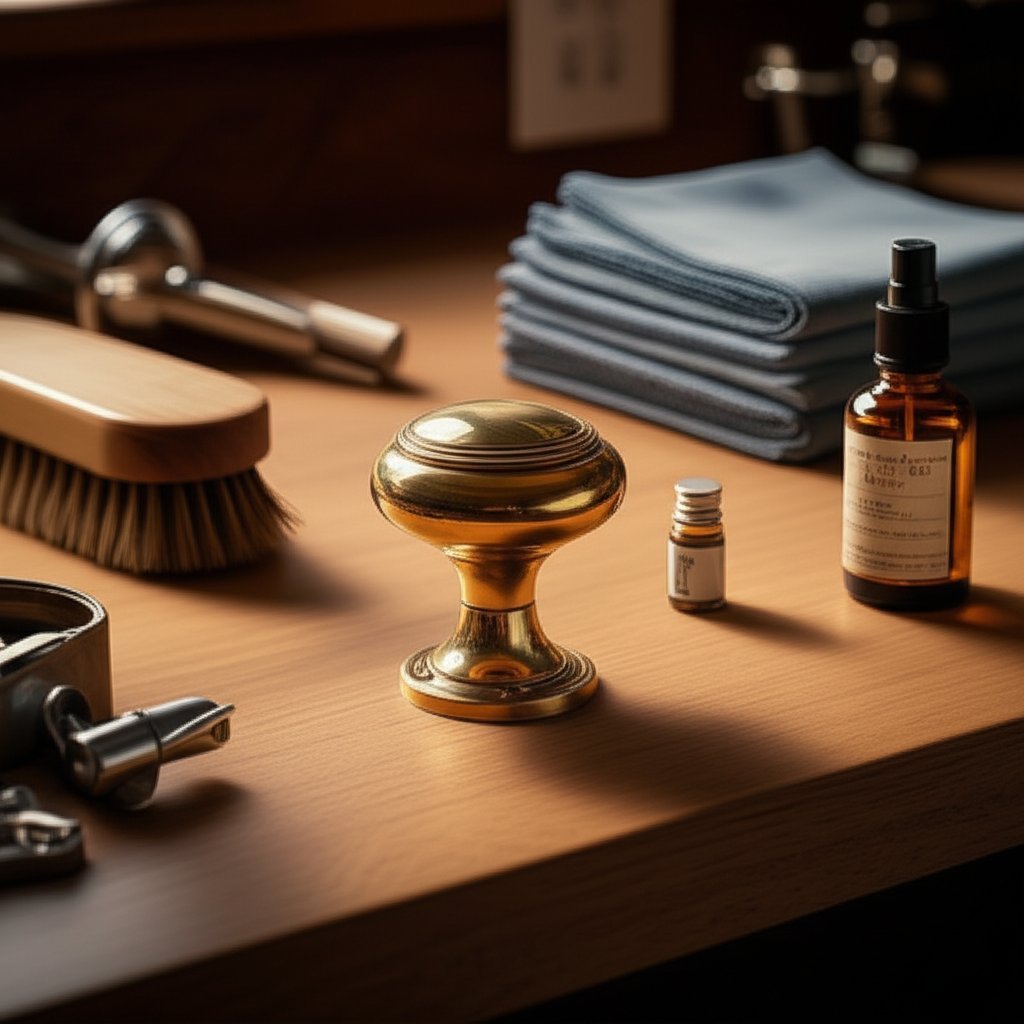
If the base metal (usually silver-gray steel or yellowish zinc) is showing through where plating has worn, cleaning will not restore the appearance. Options at this stage are: accept the wear as part of the character of the piece; touch up with brass-colored paint or spray; or have the item professionally re-plated if it’s valuable. Re-plating is done by electroplating shops and provides a genuinely durable brass layer — DIY electroplating kits exist but produce inconsistent results on complex shapes.
How to Tell If an Item Is Brass Plated vs. Solid Brass
- Magnet test: Hold a magnet to the item. If it sticks (even weakly), it’s brass-plated over steel or iron — not solid brass.
- Weight: Solid brass is noticeably heavier than plated items of the same size.
- Worn edges: Look at the edges, corners, or high-wear spots — if you see silver-gray (steel), copper-red (bronze), or white (zinc) underneath, the item is plated.
- Price and age: Most mass-produced decorative items, inexpensive hardware, and costume décor are plated. Heavy door hardware, plumbing fixtures, and antique items are more likely solid brass.
Pro Tips
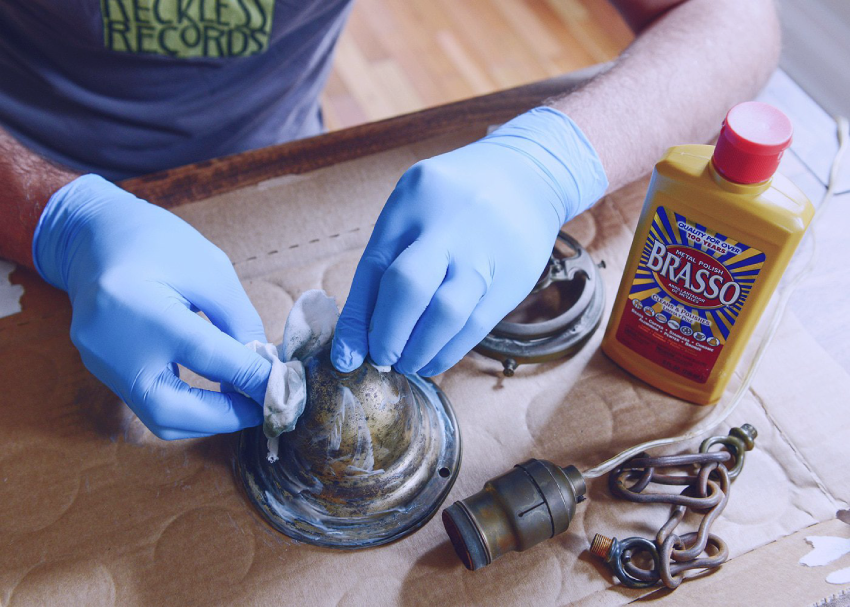
- Never polish brass-plated items with polish designed for solid brass: Commercial brass polishes contain mild abrasives that remove the oxidation layer — on solid brass that’s fine because there’s more brass underneath; on plated items, the abrasive removes the plating itself.
- Dry storage prevents tarnish: Store brass-plated items in low-humidity environments away from moisture sources. A silica gel packet in a display case significantly extends the time between cleanings.
- Handle with cotton gloves if possible: Skin oils accelerate tarnishing on brass — even plated brass. For display pieces you want to keep looking pristine, handle with clean cotton gloves.
Frequently Asked Questions
Can I clean brass plated items with baking soda?
No — baking soda paste is mildly abrasive and can scratch brass plating or cause uneven surface wear. Stick to mild soap and water for plated brass.
Can I use Brasso on brass plated items?
Brasso is formulated for solid brass and contains mild abrasives. On brass-plated items, it will remove tarnish but also progressively wear down the thin plating layer with repeated use. It’s not recommended for regularly cleaning plated pieces.
My brass plated candlesticks are turning silver in spots. What’s happening?
The brass plating has worn through to the base metal (usually silver-colored steel or zinc). Once plating is worn away, it cannot be restored by cleaning — this requires professional re-plating or cosmetic touch-up with brass paint.
Is it safe to clean brass plated items with lemon juice?
No — lemon juice is acidic enough to strip brass plating. Use only mild soap and water with a very brief diluted vinegar spot treatment if needed. Lemon juice is fine for solid brass only.
How often should I clean brass plated items?
Clean when visible grime or fingerprints are present — typically every one to three months for display pieces, more frequently for handled hardware. The less you clean plated items, the longer the plating lasts — gentle infrequent cleaning with protective wax between sessions is the best maintenance strategy.
Conclusion
Brass plated items are significantly more fragile than they look — the brass layer is thin, and the cleaning methods that work beautifully on solid brass will destroy plating in a single session. Mild soap, gentle cloth, immediate drying, and a protective wax coat is the complete care routine for plated brass. When in doubt about whether your piece is solid or plated, test with a magnet before reaching for the brass polish. For cleaning solid brass items, see our detailed guide on how to clean brass for all polishing and restoration methods.
