
Brass door handles, cabinet hinges, and drawer pulls collect grime, fingerprint oils, and tarnish — often while still attached to doors and furniture. The challenge is cleaning them in place without getting cleaner on painted surfaces or wood. This guide covers cleaning brass hardware both on and off the mounting, removing tarnish safely, and deciding when to remove hardware for a full polish versus cleaning in place.
What You’ll Need
- Lemon halves and table salt, OR commercial brass cleaner
- White vinegar
- Dish soap and warm water
- Old toothbrush
- Soft cloths or microfiber towels
- Painter’s tape (to protect surrounding surfaces when cleaning in place)
- Screwdriver (if removing hardware)
- Fine steel wool 0000 grade (for severely tarnished solid brass only)
- Paste wax or brass lacquer (for protection)
Safety and Precautions
Before cleaning, determine if the hardware is solid brass, brass-plated, or lacquered. Test with a magnet — if it sticks, the piece is brass-plated steel. Plated hardware must be cleaned with only mild soap and water or very gentle methods to avoid stripping the thin brass layer. Check for lacquer by rubbing an inconspicuous spot with a cotton ball dampened with acetone — if yellow tint transfers to the cotton, lacquer is present. Lacquered hardware should only be cleaned with mild soap and water. Acid cleaners on lacquered hardware damage the protective coat, not the tarnish underneath.
Cleaning Brass Hardware In Place (Without Removing)
Apply Painter’s Tape Around the Hardware
Before applying any cleaner to brass hardware mounted on wood, painted surfaces, or walls, apply painter’s tape around the hardware edges. Brass cleaners and acidic solutions can damage wood finishes, strip paint, and leave stains on wall surfaces. The tape protects surrounding materials while giving you full access to the metal surfaces.
Wipe Off Surface Grime with Soapy Water
Before any brass-specific cleaning, wipe handles and hinges with a cloth dampened in warm water and dish soap to remove the top layer of grime and fingerprint oils. This step makes the brass cleaner more effective by removing surface contamination that would otherwise reduce contact with the tarnished metal underneath. Use a toothbrush to reach into hinge knuckles and around handle posts.
Apply Brass Cleaner to a Cloth
Apply a small amount of commercial brass cleaner or your DIY method (lemon juice applied with a cloth, or a vinegar-dampened cotton ball) to a soft cloth — not directly to the hardware. This gives you controlled application that keeps the cleaner on the brass and off surrounding surfaces.
Rub in Small Circular Motions
Work the cleaner into the tarnished brass using small circular motions. For handles with crevices or decorative engraving, use a cotton swab or an old toothbrush to work the cleaner into detailed areas. You should see the cloth picking up dark brown or black tarnish residue as the cleaner dissolves the oxidation.
Remove Cleaner Residue Promptly
Wipe all cleaner residue off with a clean damp cloth immediately — leaving acid-based cleaner on brass hardware for extended periods can pit the surface. Follow with a dry cloth to remove all moisture.
Remove Painter’s Tape and Polish
Peel away the painter’s tape and do a final buff with a clean dry microfiber cloth. For a higher shine, a final buff with a small amount of car wax on a soft cloth adds gloss and a protective layer.
Cleaning Brass Hardware That Has Been Removed
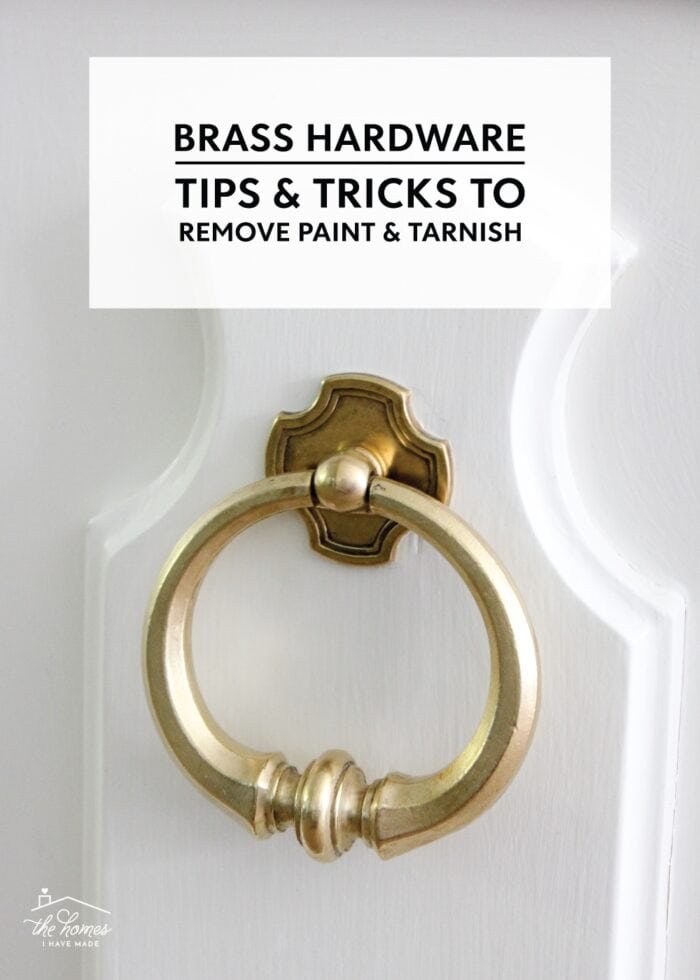
For hardware that’s heavily tarnished or has accumulated years of grime in crevices, removing it and cleaning it off the door or cabinet gives the best results.
Remove Hardware and Label It
Unscrew handles, hinges, and pulls using the appropriate screwdriver. Place screws in a small labeled bag for each piece so you don’t mix up hardware during reassembly. For hinges, take a photo of the door position before removal if alignment is a concern.
Soak in Vinegar Solution
For moderately tarnished hardware, submerge pieces in a bowl of undiluted white vinegar for 10 to 30 minutes. The acid softens and dissolves tarnish throughout all the crevices simultaneously. For heavily tarnished pieces, use a commercial brass cleaner at full contact per product directions instead.
Scrub with Toothbrush
After soaking, scrub with an old toothbrush to work loosened tarnish out of hinges, screw holes, and decorative details. The vinegar soak makes this scrubbing significantly more effective than dry scrubbing alone.
Rinse, Dry, and Polish
Rinse thoroughly under warm water and dry completely with a clean cloth. Follow with a final polish using a small amount of commercial brass polish or lemon and salt on a cloth. Buff to shine and apply a protective wax coat before remounting.
Removing Heavy Tarnish and Verdigris from Brass Hardware
Old cabinet hinges and antique door handles with thick black tarnish or green verdigris need stronger treatment. Apply a commercial brass cleaner and let it dwell for the maximum time listed on the product label. For verdigris (green corrosion), use a brass-specific verdigris remover or apply a paste of salt and vinegar, let sit for 30 minutes, and scrub with a toothbrush. In extreme cases of solid brass hardware, 0000 steel wool with commercial brass cleaner can be used very lightly. Rinse immediately and thoroughly after any treatment.
Protecting Hardware After Cleaning
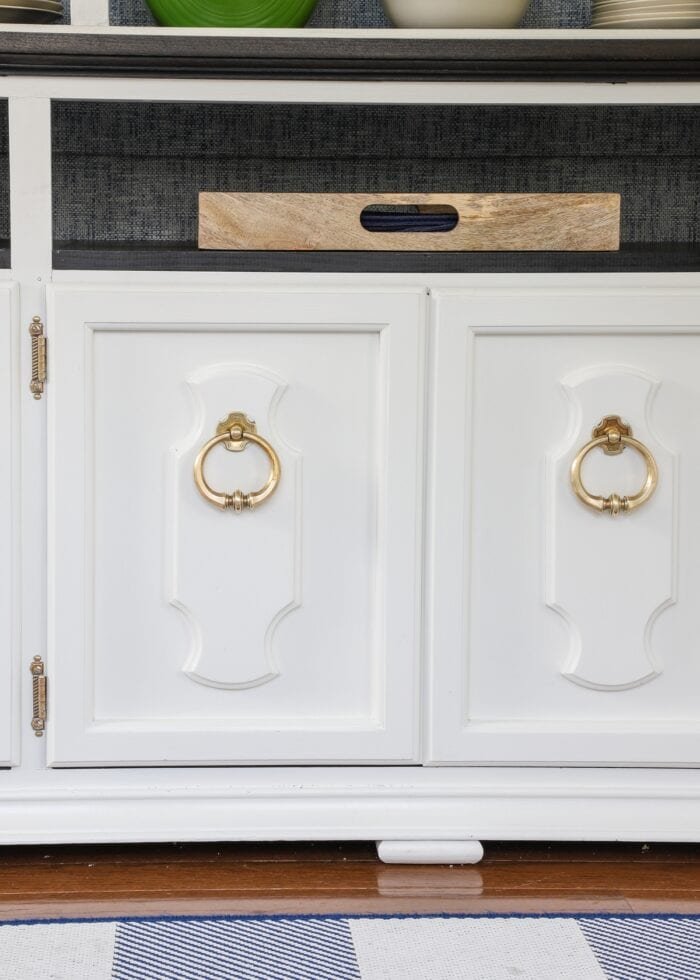
Hardware that is handled daily re-tarnishes within weeks if left unprotected. Apply a thin coat of paste wax (car wax or Renaissance Wax) buffed to a clear finish, or spray with a clear metal lacquer for longer-term protection. Wax is easier to re-apply over time; lacquer lasts longer but requires full stripping with acetone before the next polish. For high-use door handles, wax re-application every two to three months is a reasonable maintenance schedule.
Pro Tips
- Clean hinges with the door open: Cleaning hinges on a closed door is difficult and risks getting cleaner on the door frame. Open the door fully, tape around the hinge leaves, and clean with the hinge fully accessible.
- Brass cleaner on Q-tips for tight spots: Hinge knuckles and decorative handle crevices are best reached with a cotton swab rather than a cloth. Use it to apply cleaner precisely and remove tarnish from tight areas.
- Consider unlacquered brass for DIY homes: Many homeowners prefer unlacquered brass because it develops a natural, warm patina over time. Lacquered hardware always looks new or slightly faded — unlacquered develops character.
Frequently Asked Questions
How do I clean brass hinges without removing them?
Apply painter’s tape around the hinge to protect the door and frame. Apply brass cleaner with a cotton swab or soft cloth directly to the hinge surface. Work cleaner into the knuckle and leaf areas with a toothbrush. Wipe clean with a damp cloth, dry immediately, and buff.
My cabinet hardware has a shiny lacquer that’s starting to look patchy. What should I do?
Patchy lacquer should be removed completely and the hardware re-polished. Strip the remaining lacquer with acetone applied on a cloth, polish the bare brass, and re-lacquer or wax the entire piece. Partial lacquer looks worse than either fully lacquered or fully bare brass.
Can I put brass hardware in the dishwasher to clean it?
No. Dishwashers use hot water and alkaline detergents that strip brass finish, can remove lacquer, and may damage soft metals. Hand clean brass hardware only.
How do I prevent my brass handles from tarnishing so fast?
Clean off fingerprint oils monthly with a soft cloth, and apply a thin wax coat after each cleaning. The oils in skin accelerate tarnishing significantly — frequent light wiping keeps handles looking good longer than infrequent heavy polishing.
Is there a difference between cleaning door hinges and cabinet hinges?
The cleaning method is the same. Door hinges are typically larger and may have more paint overspray or primer on them from previous paint jobs — a toothbrush with brass cleaner works through both tarnish and paint buildup in one pass.
Conclusion
Cleaning brass handles, hinges, and cabinet hardware in place is practical and quick with a cloth, some brass cleaner or lemon juice, and painter’s tape to protect surrounding surfaces. For significantly tarnished hardware, removing and soaking gives a better result and lets you clean all the crevices the hardware accumulates in daily use. The finishing step — waxing or lacquering — is what turns a one-time polish into long-lasting results. For cleaning the brass pieces themselves on furniture and décor, see our guide on how to clean brass for all methods including antique restoration.
