
A mortar and pestle needs proper cleaning to remove residual flavor compounds, oils, and grinding residue without damaging the porous surface. The method depends on the material — granite and basalt are the most forgiving; marble is acid-sensitive; wood and ceramic require gentler handling. The golden rule for all types: no soap for the first few uses (it soaks into the pores and affects food flavor), no dishwasher ever, and always dry completely before storing. Here’s the complete cleaning guide.
What You’ll Need
Tools
- Stiff-bristle brush or toothbrush (nylon, not metal)
- Clean cloths or paper towels
Materials
- Warm water
- Uncooked white rice (for seasoning and odor removal)
- Coarse salt (for scrubbing stubborn residue)
- Mild dish soap (for ceramic, wooden, and well-seasoned stone mortars only — not for new stone mortars)
Safety Precautions
- Never put a stone, granite, or marble mortar in the dishwasher — heat and detergent cause cracking, pitting, and stripping of the natural surface texture needed for effective grinding.
- Never use soap on a new or unseasoned stone mortar — stone mortars must be seasoned first (ground with rice) to fill the pores; introducing soap before this creates a soapy taste in food that’s very difficult to remove.
- Don’t use acidic cleaners on marble mortars — marble is calcium carbonate and etches immediately with vinegar, lemon juice, or any acid.
How to Clean a Mortar and Pestle by Material Type
Step 1: Rinse Immediately After Use
Regardless of material, rinse the mortar and pestle under warm running water immediately after use while the ground material is still fresh and moist. Use your fingers or a brush to rub away most residue while rinsing. This prevents food material from drying and hardening in the pores, which makes subsequent cleaning much harder.
Step 2: Scrub with the Rice Method (For Stone, Granite, and Basalt)
The most effective deep-cleaning method for stone mortars uses dry white rice as an abrasive. Add 2–3 tablespoons of uncooked white rice to the dry or slightly damp mortar. Grind the rice vigorously with the pestle — the rice acts as an abrasive that scrubs the interior surface, absorbs residual oils and odors, and pulls fine particles from the pores. Discard the rice (it will be grey or discolored from the absorbed residue). Rinse with warm water and repeat with a fresh batch of rice until the ground rice comes out clean and white. This technique also works as the initial seasoning method for a brand-new stone mortar.
Step 3: Coarse Salt Scrub for Stubborn Residue
For stubborn dried residue, add a tablespoon of coarse salt (kosher salt or sea salt) and a splash of water to the mortar. Use the pestle to grind the salt against the residue areas — the salt acts as a mild abrasive without scratching the stone surface. The salt also absorbs residual odors from strong-smelling ingredients like garlic, chili, or fish paste. Discard the salt mixture and rinse thoroughly with warm water. Repeat if needed.
Step 4: Soap Cleaning (Ceramic, Wooden, and Well-Seasoned Stone Mortars)
For ceramic mortars and well-seasoned stone mortars (those that have been used many times and have developed a seasoned patina), a small amount of mild dish soap on a brush is acceptable. Scrub gently, rinse immediately and thoroughly, and dry completely. For wooden mortars, use as little water as possible — wood absorbs moisture and can swell, crack, or develop mold. Wipe wooden mortars with a barely damp cloth and dry with a towel immediately.
Step 5: Remove Odors Between Uses
Strong-smelling ingredients (garlic, star anise, fish sauce residue) leave odors that transfer to subsequent uses. The best method: grind a small amount of white rice in the cleaned mortar until the rice absorbs the residual odor. Discard and rinse. Alternatively, grind a small piece of bread in the mortar — bread is highly absorbent and pulls odors effectively. For marble and ceramic mortars, a thin paste of baking soda and water applied and left for 10 minutes before rinsing neutralizes most odors without any acid risk.
Step 6: Dry Completely Before Storing
This step is often skipped and causes the most problems — mold and mildew in stone mortar pores, cracking in wood, and rust in metal. After rinsing, wipe with a clean dry cloth and allow to air dry completely in an upright position (mortar opening facing up, pestle resting alongside, not inside). For stone mortars, 30–60 minutes of air drying at room temperature is usually sufficient. For wooden mortars, allow several hours. Never store with the pestle inside the mortar — it traps moisture inside.
How to Season a New Stone Mortar
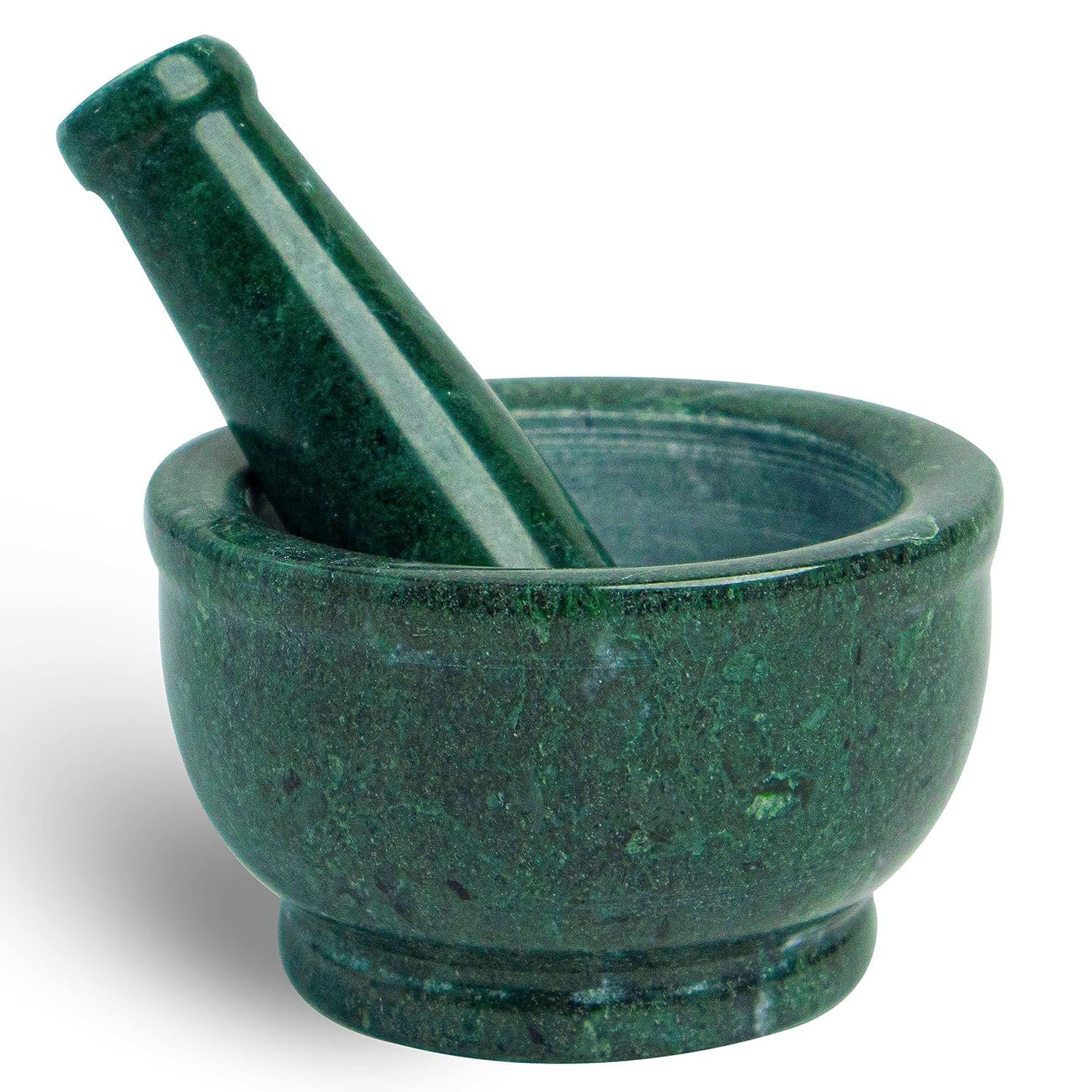
A brand-new granite or basalt mortar has rough, open pores that will transfer grit into your food. Seasoning closes the pores and prepares the surface for food use.
- Rinse with warm water to remove stone dust from manufacturing. Do not use soap.
- Dry completely.
- Add 1/4 cup of uncooked white rice. Grind until the rice becomes fine powder. Discard. The powder will be grey from stone dust — this is normal.
- Repeat with fresh rice until the ground rice comes out white.
- Add 4–5 peeled garlic cloves and grind to a paste. This seasons the surface with oils.
- Rinse and dry. Your mortar is now seasoned and ready to use.
Cleaning Quick Reference by Material
| Material | Daily Clean | Deep Clean | Avoid |
|---|---|---|---|
| Granite / Basalt | Rinse with warm water; rice method | Coarse salt scrub; rice method | Soap on new mortars, dishwasher, acids |
| Marble | Rinse with warm water only | Baking soda paste for odors; rinse | Any acid (vinegar, lemon), dishwasher, abrasives |
| Ceramic | Warm water and mild soap; brush | Soap scrub; rinse well | Dishwasher (high-end ceramic), strong abrasives |
| Wood | Barely damp wipe; dry immediately | Minimal water; coarse salt rub; dry completely | Soaking, dishwasher, too much water |
| Cast Iron | Hot water; brush; dry and oil | Salt scrub; hot water; immediately dry and coat with oil | Soap, dishwasher, soaking |
Pro Tips
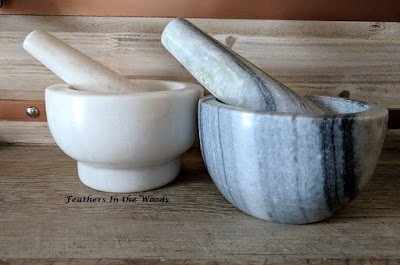
- Grind rice after every use of strong spices — it takes 2 minutes and prevents flavor carryover between recipes, which is the most common complaint about mortar and pestle use.
- Use the mortar as a small prep bowl between cleaning and next use — a clean, dry stone mortar can store whole spices in it between uses without any issue. The stone keeps them cool and dark.
- For marble mortars, stick to dry grinding — marble’s acid sensitivity means wet pastes with citrus or vinegar-heavy ingredients can etch the interior surface. Use granite or basalt for wet applications.
Frequently Asked Questions
Can I use soap on my granite mortar and pestle?
On a well-seasoned granite mortar that has been used regularly for months, a small amount of mild dish soap is acceptable for occasional deep cleaning. Rinse extremely thoroughly and allow to dry completely. On new or rarely-used granite mortars, avoid soap — it penetrates the pores and can transfer soapy flavor to food. The rice method handles most cleaning needs without soap.
My mortar and pestle smells like garlic — how do I remove it?
Grind 2–3 tablespoons of white rice until powdery, discard, and repeat. The rice is highly effective at absorbing garlic and onion odors from stone pores. Alternatively, grind a small piece of bread, which also absorbs odors well. If the smell persists, fill the mortar with a 1:1 solution of water and lemon juice (for granite only — not marble) and let soak for 30 minutes, then rinse and rice-grind to remove any lemon flavor.
Can I put my mortar and pestle in the dishwasher?
Never put a stone, ceramic, or wooden mortar and pestle in the dishwasher. The high heat causes thermal shock that cracks stone and ceramics. Detergents penetrate porous stone and wood and are very difficult to fully remove, affecting food flavor for many subsequent uses. Hand washing is the only appropriate method.
How do I clean a mortar and pestle that has mold?
Mold in a stone mortar means it was stored wet. Clean with a stiff brush and very hot water, then allow to dry completely for 24–48 hours in a sunny, well-ventilated spot. UV exposure naturally kills mold spores on stone surfaces. Once fully dry, re-season with the rice method. For wood mortars, mold penetration is deeper — if the mold has discolored the wood through the grain, the mortar should be replaced rather than used for food.
Conclusion
Cleaning a mortar and pestle properly extends its life and keeps it food-safe for decades. The rice method handles most cleaning needs without soap or chemicals, the coarse salt scrub tackles stubborn residue, and complete drying before storage prevents all mold issues. Match your cleaning approach to your mortar’s material and you’ll never deal with soapy-tasting spices or flavor carryover between recipes.
For related kitchen tool care, see our guide on how to clean a cast iron skillet — another kitchen tool that requires no-soap or minimal-soap care for the same porous-surface reasons. For full kitchen cleaning, see our room-by-room house cleaning guide.
