
Why Most Cleaning Schedules Fail
The two most common reasons cleaning schedules collapse within a week are task overload and no recovery plan for missed days. Many people make the mistake of putting too many chores into one day, then they feel behind immediately. Others create a perfect plan that only works if every day goes exactly right.A realistic schedule should take no more than 20 to 30 minutes per day on average, should focus on one or two rooms per day rather than the whole house, and should treat skipped days as normal rather than failure. One important detail many beginners miss: a good schedule is not about equal work every day. It is about balancing effort across the week so the mess never builds up enough to feel overwhelming.The 4-Tier Cleaning Framework
- Daily (5–10 minutes): Quick habits that prevent mess from accumulating — not deep cleaning
- Weekly (20–30 minutes per session, 1 room per day): Regular surface cleaning of each room on a rotating basis
- Monthly (45–60 minutes, 1–2 tasks): Tasks that keep appliances working and prevent buildup that takes hours to remove later
- Seasonal (2–4 hours, 4x per year): Deep cleaning items that only need attention a few times a year
Use this framework as your base, then adjust it for real life. For example, homes with pets usually need more floor care. Homes with toddlers usually need more spot cleaning and laundry. People who cook often should give the kitchen more attention than the living room.
Safety and Precautions
- Never mix cleaning products. Bleach and ammonia, bleach and vinegar, and other combinations produce toxic fumes. Use one product at a time and rinse surfaces before switching products.
- Ventilate rooms during cleaning. Open windows when using spray cleaners, especially in bathrooms and kitchens where vapors accumulate faster.
- Store all cleaning products out of reach of children in a locked or high cabinet, even “natural” products like vinegar and baking soda which can still cause harm if ingested.
- Wear gloves for bathroom and kitchen cleaning to protect skin from prolonged contact with disinfectants.
Daily Cleaning Tasks (5–10 Minutes Total)
These are habits, not cleaning sessions. They take 1 to 2 minutes each and prevent the mess accumulation that makes weekly cleaning take twice as long.| Task | Time | Why It Matters |
|---|---|---|
| Make the bed | 2 min | Sets the tone for the whole day; prevents bedroom from feeling chaotic |
| Wipe kitchen counters after cooking | 1 min | Prevents grease from hardening; eliminates crumbs that attract pests |
| Load/unload dishwasher or wash dishes | 5 min | Prevents pile-up that makes kitchen look and feel messy all day |
| Quick wipe of bathroom sink and counter | 1 min | Toothpaste and soap scum is 10x harder to remove after 3 days |
| Sweep or Roomba high-traffic floors | 2 min | Prevents crumbs and debris from tracking through the house |
| Toss or sort mail and papers | 2 min | Paper clutter is the fastest way for a clean space to look dirty |
If you only keep one daily habit, make it kitchen reset. A clean kitchen changes how the whole home feels. It also stops old food from sitting out overnight, which is one of the fastest ways mess turns into smell.
Weekly Cleaning Schedule (Room-by-Room Rotation)
Assign one or two rooms per day rather than cleaning everything at once. This keeps daily sessions manageable and ensures every room gets cleaned once a week. Adjust based on your household size — smaller homes can combine rooms to leave rest days.| Day | Room/Area | Key Tasks | Est. Time |
|---|---|---|---|
| Monday | Kitchen | Wipe all surfaces, clean stovetop, scrub sink, wipe inside microwave, clean outside of appliances | 25 min |
| Tuesday | Bathrooms (all) | Scrub toilet, clean sink & mirror, scrub shower/tub, wipe floors, replace towels | 30 min |
| Wednesday | Living Room | Dust all surfaces, vacuum upholstery, vacuum floors, wipe remote controls and light switches | 20 min |
| Thursday | Bedrooms | Change bed linens, dust surfaces, vacuum floors, clear clutter from nightstands | 25 min |
| Friday | All Floors | Vacuum entire home, mop hard floors, spot-clean high-traffic areas | 30 min |
| Saturday | Laundry + Catch-up | Wash, dry, fold and put away laundry; handle any tasks missed during the week | 60 min (mostly unattended) |
| Sunday | Rest / Light Reset | Tidy common areas, empty trash bins, quick wipe of kitchen and bathrooms | 15 min |
For families with kids or pets: Add one extra floor pass during the week and one laundry day task. Families usually do better with shorter sessions than with one long cleaning block. That keeps the schedule from building up a big weekend job.
Monthly Cleaning Tasks
Credit: template.net
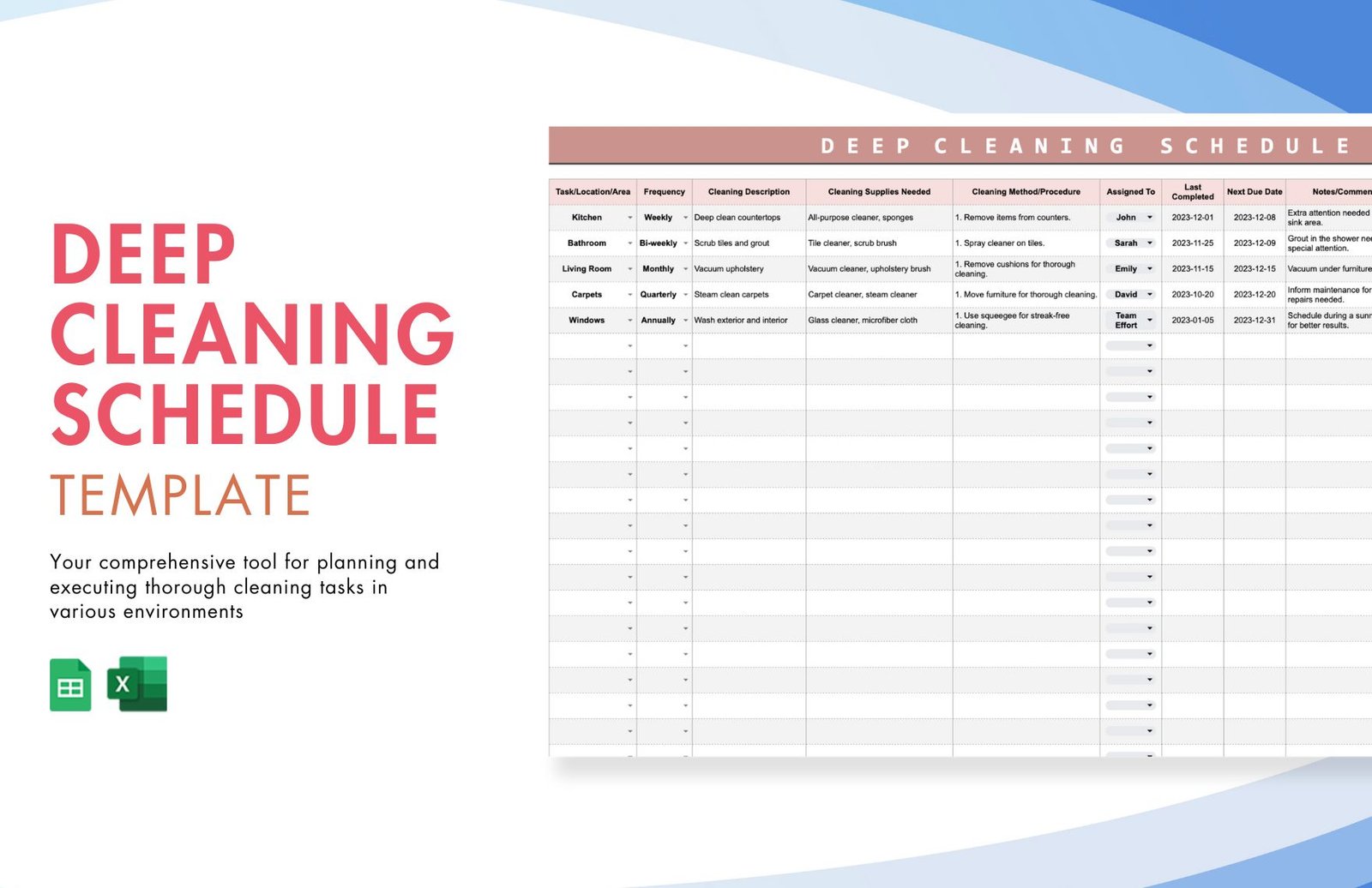
Pick 1 to 2 monthly tasks on the first weekend of each month. These are the tasks that, if skipped for 6 months, turn into a full-day project. Doing them monthly keeps each session under 30 minutes. A useful rule: choose tasks that protect appliances, stop buildup, or prevent forgotten corners from becoming gross.- Clean the refrigerator interior — remove items, wipe shelves, check for expired food (30 min) — see our full guide on refrigerator cleaning
- Clean washing machine — run a vinegar cycle, wipe door gasket (15 min) — details in our washing machine cleaning guide
- Run dishwasher cleaning cycle — vinegar bowl in bottom rack, hot cycle (5 min active, 60 min cycle) — see dishwasher cleaning guide
- Clean bathroom exhaust fan cover — remove, vacuum dust from vents (10 min)
- Wipe baseboards — damp cloth pass on all baseboards throughout the home (15 min) — full guide: how to clean baseboards
- Clean microwave inside and out — steam bowl method, wipe interior (10 min)
- Dust ceiling fans and light fixtures — microfiber duster on all blades and globes (10 min)
- Spot-treat carpet stains — address any new stains before they set permanently (15 min)
If monthly cleaning keeps getting skipped, move just one task into the weekly rotation. For example, clean the microwave during kitchen day or dust ceiling fans on floor day. That small move is often enough to keep the whole system from sliding.
Seasonal Cleaning Tasks (Quarterly)
Do these tasks four times a year — ideally at the start of each season (March, June, September, December). Each set takes 2 to 4 hours total but replaces the need for any major emergency cleaning marathon. These tasks are best done when the weather changes, because that is also when homes usually need filter changes, window cleaning, and bedding swaps.- Deep clean the oven (inside, racks, and door glass) — see oven cleaning tips
- Wash or dry-clean curtains and window treatments
- Flip or rotate mattresses; deep clean mattress surface
- Clean inside all kitchen cabinets — remove items, wipe shelves and doors
- Descale showerheads and faucets with vinegar
- Clean air vents and HVAC filters throughout the home
- Wash all windows — inside and outside
- Deep clean grout in bathrooms and kitchen
- Clean garage, storage areas, and entry closets
- Launder all bedding including duvet covers, pillows, and mattress covers
Do not try to finish every seasonal task in one day unless you live in a very small home. Split them across a weekend or two. Seasonal cleaning works best when it feels like a project, not a punishment.
Time Estimates by Household Size
| Household Size | Daily | Weekly (per session) | Monthly (total) | Seasonal (total) |
|---|---|---|---|---|
| Studio/1BR apartment | 5 min | 20 min | 45 min | 2 hours |
| 2–3BR home, 1–2 people | 10 min | 25 min | 90 min | 3 hours |
| 3–4BR home, family of 3–4 | 15 min | 30 min | 2 hours | 4–5 hours |
| 4+ BR home, 4+ people or pets | 20 min | 45 min | 2.5 hours | 6+ hours |
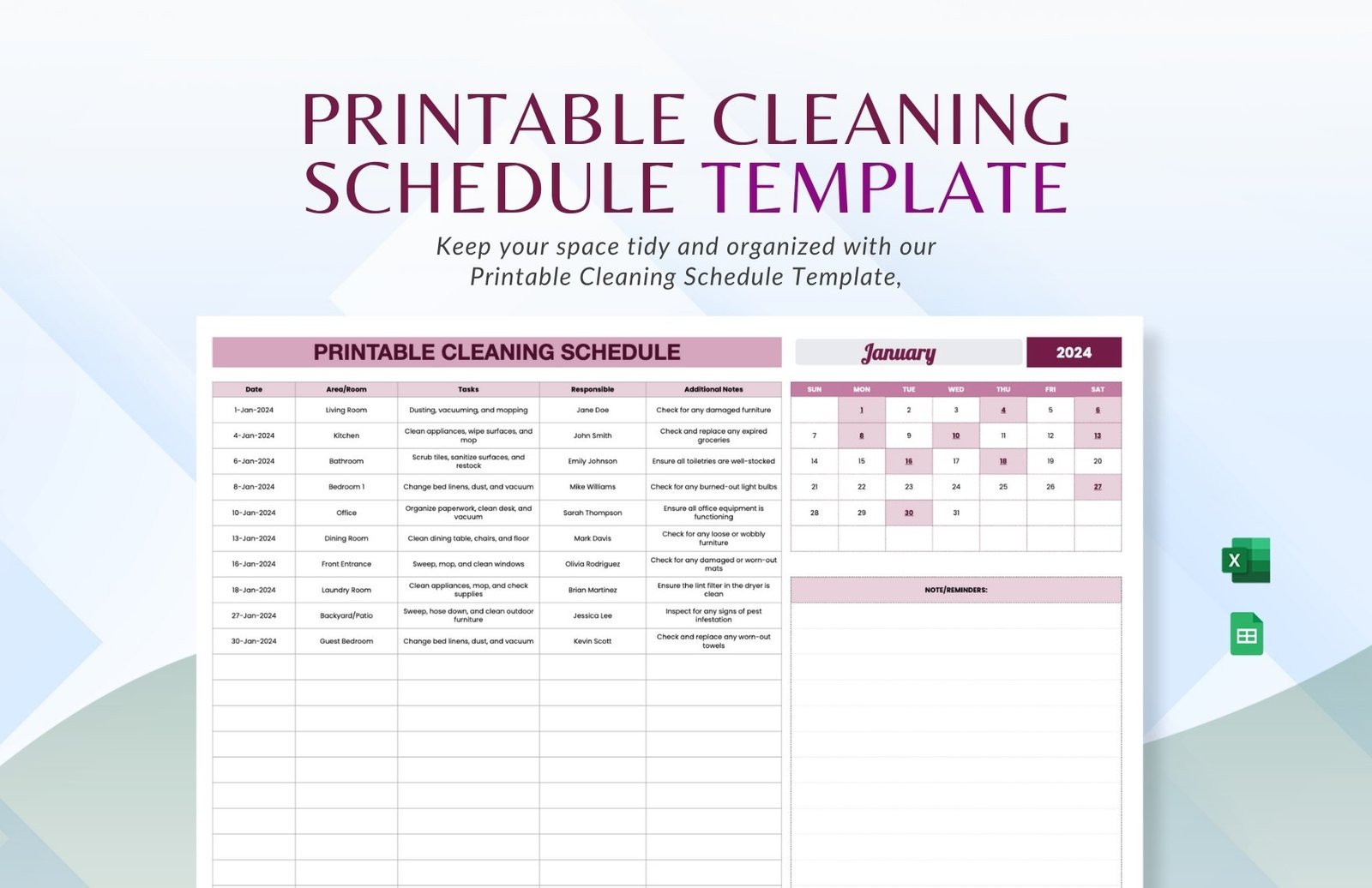
These are starting points, not strict rules. If you work from home, have pets, or cook at home often, your kitchen and floors may need more time. If you travel a lot or live alone, your schedule may be lighter.
Credit: template.net
What to Do When You Miss Days
A schedule that falls apart when you miss one day is not a realistic schedule. Build a recovery rule before you start: if you miss Monday’s kitchen clean, move it to Tuesday and shift Tuesday’s bathroom clean to Wednesday. Do not try to catch up by cleaning everything in one day — that creates the same overwhelm that caused the skip in the first place.Missing a full week? Skip the missed week entirely and restart on the current week. One unclean week rarely causes permanent damage. The consistent 80% adherence over months is far more effective than the perfect schedule that gets abandoned after a missed day. Apply the same thinking to any room-by-room schedule in our broader guide on house cleaning tips.Another helpful reset rule: never let “catch-up” become a hidden second job. If you miss two or three days, only restore the most important tasks first, like dishes, trash, kitchen counters, and bathroom sink cleanup. Once the home feels stable again, return to the normal rotation.
Frequently Asked Questions
How long should cleaning take each week?
For a typical 2 to 3 bedroom home, expect about 20 to 30 minutes per daily room cleaning session plus daily 5 to 10 minute habits. Total weekly active cleaning time should be around 2 to 3 hours spread across 7 days — not done all at once on the weekend.What order should I clean rooms in?
Clean in a top-to-bottom, back-to-front order within each room: ceiling fans and high shelves first, then counters and furniture surfaces, then floors last. For the house as a whole, start with bedrooms, move to common areas, then do bathrooms last since they require the strongest cleaners and the most contact time.How do I get my family to follow a cleaning schedule?
Assign specific tasks rather than just “help clean.” Children ages 5 and up can handle vacuuming, dusting, and putting away laundry. Teenagers can clean bathrooms and do floors. Specific task ownership is more effective than asking for general help, which often gets ignored.Should I clean by room or by task type?
Clean by room for regular weekly maintenance — it’s faster and less exhausting than carrying cleaning supplies through the entire house to do “all vacuuming” or “all dusting.” Clean by task type only for deep cleaning sessions when you are using specialized equipment like a steam cleaner or carpet cleaner that you do not want to move multiple times.How often should I deep clean the kitchen?
The kitchen stovetop, counters, and sink should be wiped down weekly. Inside the microwave and refrigerator monthly. The oven every 3 to 6 months depending on use. Range hood filters monthly if you cook frequently. Full kitchen deep clean (inside all cabinets, backsplash, appliance exteriors) every 3 to 6 months.Conclusion
Credit: template.net
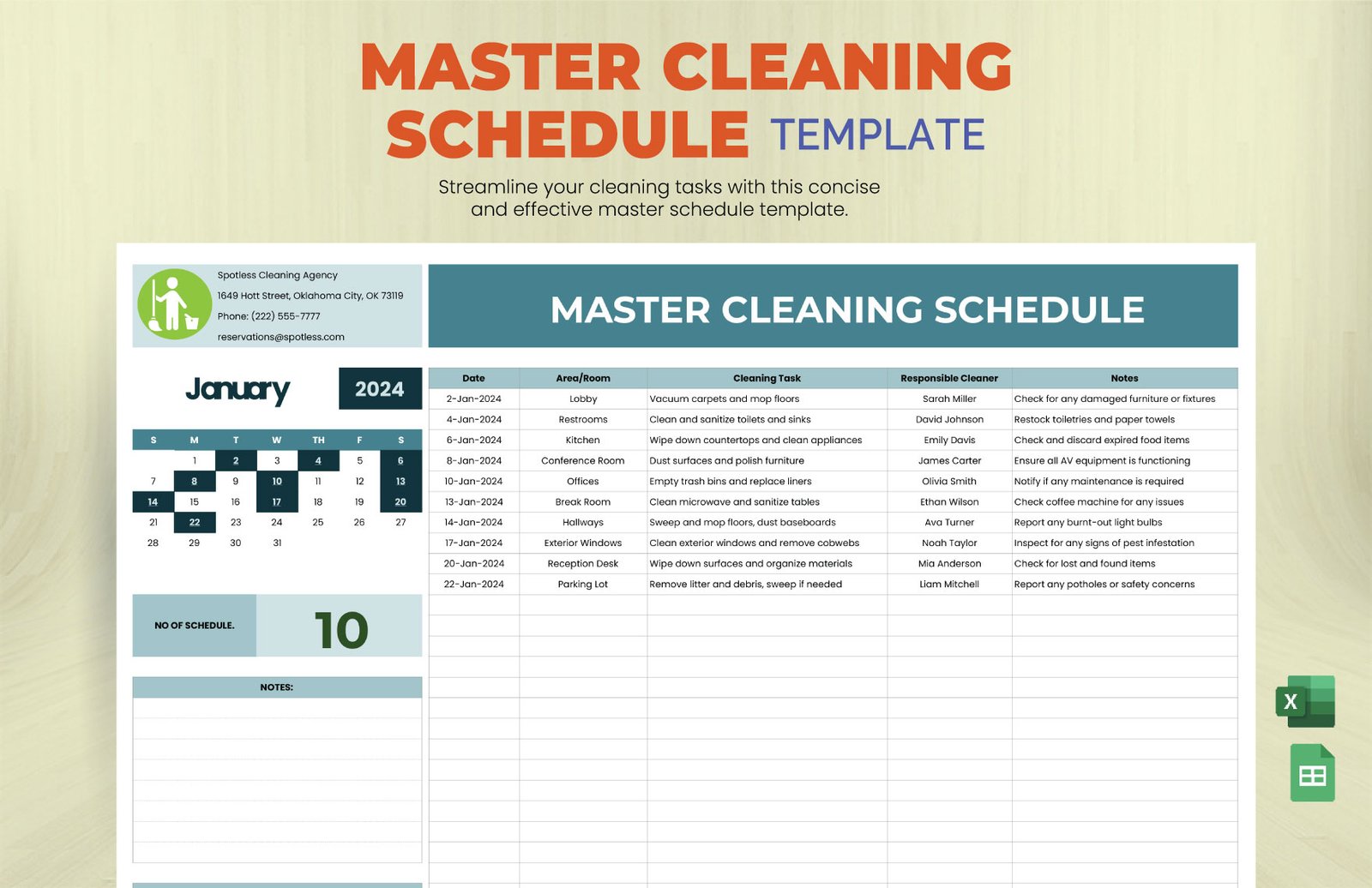
A cleaning schedule that works is one you follow 80% of the time over months, not one that is theoretically perfect but abandoned after a week. The daily habits system, weekly room rotation, and monthly task list in this guide are sized for a realistic household schedule — not for someone who cleans professionally. Start with just the daily habits for two weeks before adding the weekly schedule. The consistency compounds quickly, and within a month, maintaining a clean home takes far less mental energy than starting from scratch each time.To dive deeper into specific room cleaning tasks, check out our guides on bathroom deep clean, kitchen cleaning tips, and laundry room cleaning tips.