
Before cleaning any coin, you need to make one critical decision: is this coin valuable or collectible? If it is, do not clean it. Cleaned coins lose significant numismatic value — even gentle cleaning creates microscopic scratches visible under magnification that collectors and dealers immediately identify. This guide is for cleaning non-collectible coins: everyday change, decorative coins, foreign currency you want to display, or copper pennies you want to brighten for craft projects. If you’re unsure whether a coin is valuable, have it evaluated by a coin dealer before cleaning.
What You’ll Need
- Mild dish soap and warm water
- White vinegar
- Table salt
- Lemon juice
- Baking soda
- Soft cloths or cotton balls
- Soft toothbrush
- Olive oil (for very old encrusted coins)
Safety and Precautions
Never clean collectible, antique, or potentially valuable coins — the damage is irreversible and the value reduction is significant. Never use abrasive cleaners, metal polish, or rough cloths on coins — they create permanent surface scratches. Do not rub coins dry — always rinse and pat dry with a soft cloth. For coins with encrusted corrosion or heavy deposits, soaking over time is always safer than mechanical scrubbing. Never clean both sides of a coin simultaneously on a hard surface — lay coins on a soft cloth to avoid scratching the reverse side.
The Most Important Rule: Check Value Before Cleaning
Date and mint mark determine value far more than condition in many coin types. Look at the date and any letters near the date (mint mark). Check online price guides (PCGS, NGC, or coin dealer sites) for the specific year and mint mark. If there’s any possibility the coin is valuable, put it in a protective coin sleeve or flip and don’t clean it. Even modern coins from certain years are worth multiples of face value in original condition.
Cleaning Copper Coins
Vinegar and Salt Soak
Mix 1/4 cup white vinegar with one teaspoon of table salt in a bowl. Drop copper coins in and watch them — they brighten within 3 to 5 minutes. Don’t leave them longer than 5 minutes; extended acid exposure turns copper pink or can cause uneven pitting. Remove, rinse with water immediately, and dry by patting (not rubbing) with a soft cloth.
Lemon Juice Method
Drop copper coins in fresh lemon juice for 2–5 minutes, monitoring closely. Remove and rinse thoroughly. Both vinegar and lemon juice work identically — the citric acid in lemon is slightly gentler but both achieve the same bright copper result quickly.
Ketchup Method
Coat copper coins in ketchup, let sit for 5 minutes, then rub gently with a soft cloth, rinse, and dry. This is slower but gentler and effective for moderate tarnish.
Cleaning Silver Coins
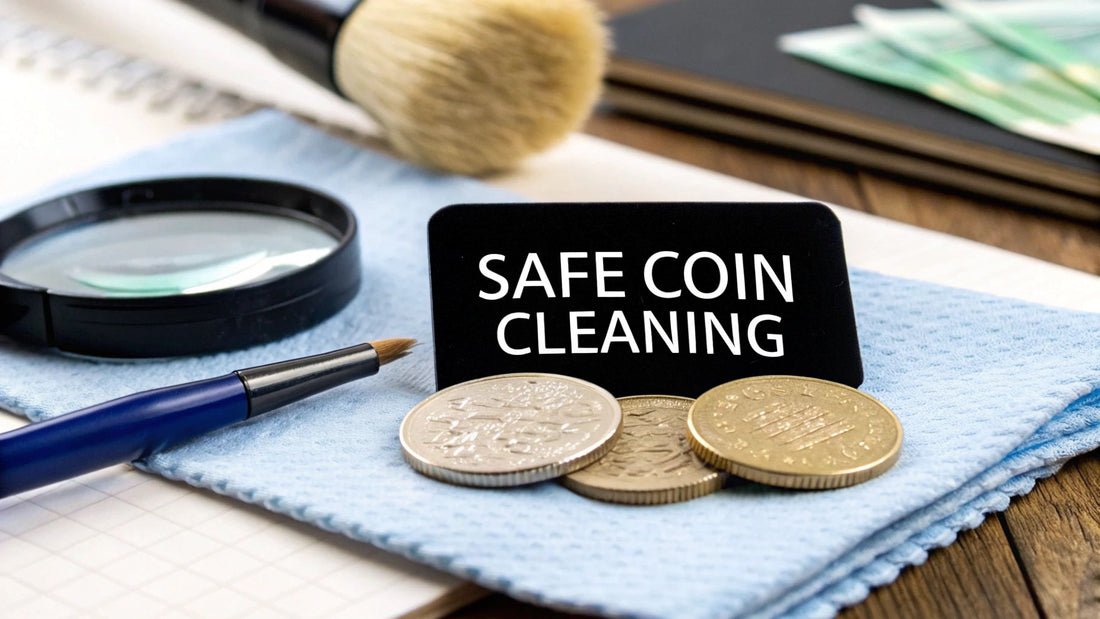
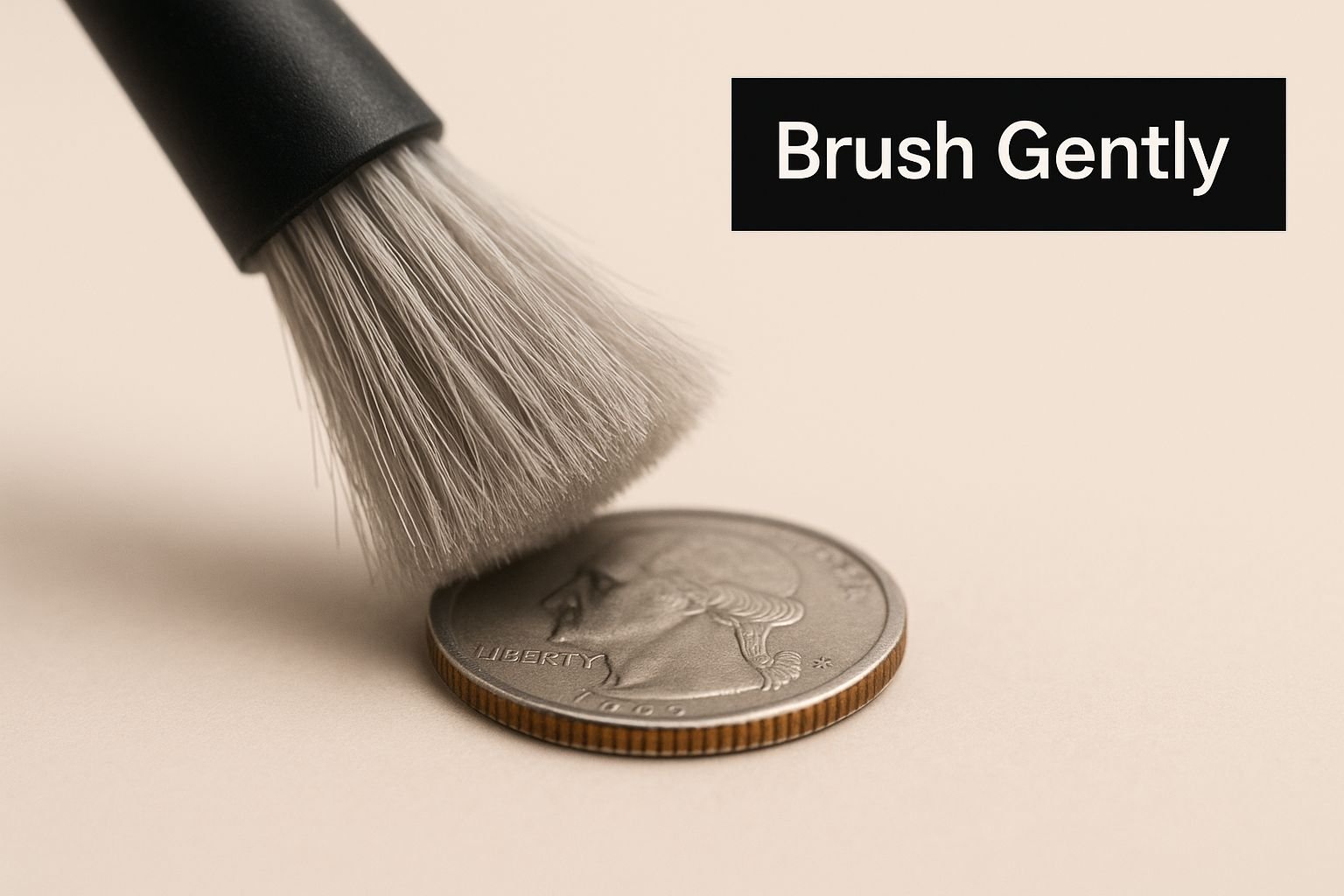
For common silver-colored coins (modern US quarters, dimes): warm soapy water and a soft toothbrush is usually sufficient for surface grime. For actual silver coins (pre-1965 US 90% silver coinage): baking soda paste applied gently with a cotton ball, rinsed thoroughly, removes tarnish without damaging the metal. Do not use vinegar or strong acids on silver — they can cause pitting. For display silver coins, a commercial silver polish cloth (like Sunshine Cloth) is the most controlled polishing option.
Cleaning Gold Coins
Gold does not tarnish — a “dirty” gold coin is covered in surface grime, not oxidation. Warm water and dish soap with a soft brush is all that’s needed. Never use chemicals on gold coins — the only thing on a gold coin that needs removal is surface contamination, and soap and water handles it gently without risk. Rinse thoroughly and dry by patting with a soft cloth.
Cleaning Very Old or Encrusted Coins
Ancient coins, heavily corroded old coins, or coins found with metal detectors often have thick mineral or soil encrustation. The safest approach is soaking in olive oil for weeks to months — it slowly softens the encrustation without damaging the metal underneath. Change the oil periodically and gently remove softened material with a wooden toothpick (never metal tools). This process requires patience but preserves the coin’s surfaces better than any faster method. For coins with potentially significant archaeological or historical value, consult a professional conservator.
Pro Tips
- Never rub — always pat dry: Rubbing a wet coin with a cloth creates hairline scratches in the metal. Pat dry with a soft cloth or let air dry on a soft surface.
- The before/after test: Before cleaning a batch of old coins, select one of the least interesting-looking ones as your test coin. Clean it first and evaluate the result before treating the others.
- Store cleaned coins properly: Cleaned coins that are re-exposed to air and humidity quickly re-tarnish. Store in coin flips, albums, or airtight holders after cleaning to maintain the cleaned appearance.
Frequently Asked Questions
Will cleaning coins reduce their value?
For collectible coins, almost always yes — even professional-looking cleaning reduces collector value. The coin grading industry considers cleaning a form of damage. For common face-value coins with no numismatic premium, cleaning has no effect on their spending value.
How do I make pennies shiny in seconds?
Drop in white vinegar and salt solution — they brighten within 30–60 seconds. This is why it’s a common science experiment. Monitor closely; remove immediately when bright, rinse thoroughly.
Can I clean coins in a tumbler?
Rock tumblers are used by some collectors to clean common coins, but tumbling creates visible wear patterns that look different from natural circulation wear and are identifiable to collectors. For non-collectible coins destined for display, it’s acceptable. For anything with collector potential, no.
How do I clean a silver dollar without damaging it?
If it’s a common-date Morgan or Peace silver dollar in circulated condition: warm water and dish soap with a soft brush is the maximum safe cleaning. If it’s a potentially valuable coin, have it evaluated by a dealer or grading service before touching it.
What removes green corrosion from copper coins?
Green verdigris on copper coins is copper carbonate. The vinegar-and-salt method removes it effectively. Soak for 2–5 minutes, check progress, and remove when the green is gone. Rinse immediately and dry. For encrusted verdigris, a longer soak in plain vinegar (without salt) is gentler and more controlled.
Conclusion
Coin cleaning is simple for common coins and carries real risk for potentially valuable ones. The decision of whether to clean a coin is more important than the cleaning method itself. For everyday change and non-collectible coins, vinegar-and-salt for copper and soap-and-water for silver and gold handles the full range of cleaning needs. The critical finishing step is immediate rinsing and gentle pat-drying to avoid creating the hairline scratches that make coins look worse than they did before cleaning. For related home metal cleaning, see our guide on how to clean copper for the same chemistry applied to copper surfaces beyond coins.
