
A porcelain sink loses its gloss from rust stains, hard water deposits, coffee and tea staining, and the use of harsh abrasive cleaners that micro-scratch the surface. You can clean a porcelain sink and restore most of its original shine using baking soda, white vinegar, and a few targeted stain removers — without scratching the enamel. This guide covers daily cleaning, stain removal, and restoring the glossy finish.
What You’ll Need
- Baking soda
- White vinegar
- Hydrogen peroxide (3%)
- Dish soap (mild)
- Soft cloth or non-scratch sponge
- Old toothbrush
- Cream of tartar (for rust stains)
- Bar Keepers Friend (powder or liquid — safe for porcelain)
- Lemon juice (optional)
Safety and Precautions
Never use steel wool, wire brushes, or rough scouring pads on porcelain — they permanently scratch the enamel coating and make the surface more prone to staining. Avoid undiluted bleach on colored porcelain sinks — it can cause fading. Limit Bar Keepers Friend to occasional deep cleaning, not daily use, as it is mildly abrasive. Always rinse thoroughly after any cleaning treatment to prevent chemical residue from sitting on the surface.
Daily Cleaning: Keeping Porcelain Looking New
Rinse After Every Use
The single most effective habit for keeping a porcelain sink clean is rinsing it after every use. Coffee, tea, and food particles that sit on the surface cause progressive staining. A 10-second rinse after each use prevents the vast majority of the staining problems that require heavy cleaning later.
Wash with Dish Soap and a Soft Cloth
Weekly cleaning: apply a small amount of mild dish soap to a non-scratch sponge or soft cloth. Wipe the entire sink basin, faucet area, and drain surround. Rinse thoroughly with water. This removes soap scum, light mineral deposits, and surface grime before it has a chance to etch the enamel.
Deep Cleaning with Baking Soda
Wet the Sink and Sprinkle Baking Soda
Wet the sink basin thoroughly with water. Sprinkle a generous coating of baking soda over the entire bottom and sides of the sink. Baking soda is a mild abrasive that cleans without scratching porcelain — it’s strong enough to remove light staining and soap scum while being gentle enough for regular use.
Scrub with a Non-Scratch Sponge
Using a damp non-scratch sponge, scrub the baking soda in circular motions across the entire sink surface. Pay extra attention to the drain area, the waterline where mineral deposits form, and the corners where grime accumulates. The baking soda paste should feel slightly gritty but shouldn’t scratch.
Spray with White Vinegar
After scrubbing with baking soda, spray or pour white vinegar over the baking soda. The reaction creates a foaming action that lifts loosened grime and deodorizes the drain area simultaneously. Let it fizz for two to three minutes.
Rinse Thoroughly
Rinse the entire sink with warm running water, making sure all baking soda residue is removed. Baking soda left to dry on porcelain can leave a powdery film. Follow with a wipe-down using a clean damp cloth to reveal the clean surface.
Removing Stains from Porcelain
Rust Stains
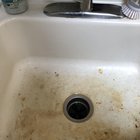
Rust stains on porcelain sinks come from metal items left sitting in the sink or from iron in the water supply. To remove them, mix cream of tartar with enough hydrogen peroxide to form a thick paste. Apply the paste to the rust stain and let it sit for 30 minutes. Scrub gently with a soft cloth and rinse. For stubborn rust, Bar Keepers Friend applied with a damp cloth and left for one to two minutes is highly effective — it contains oxalic acid that dissolves iron oxide (rust) without scratching porcelain.
Hard Water and Mineral Deposits
White or gray mineral scale around the faucet base, drain, and waterline is dissolved by acid. Soak paper towels in undiluted white vinegar and lay them over the affected areas. Leave for 30 to 60 minutes. Remove the paper towels and scrub with a soft brush or sponge. Rinse thoroughly. For heavy calcium scale, Bar Keepers Friend provides stronger acid cleaning when vinegar alone isn’t enough.
Coffee, Tea, and Food Stains
These organic stains respond well to a hydrogen peroxide treatment. Pour 3% hydrogen peroxide directly onto the stained area and let it sit for 15–30 minutes. Scrub gently and rinse. For very dark staining, apply a paste of baking soda and hydrogen peroxide, let it sit for 30 minutes, then scrub and rinse.
Gray or Black Scuff Marks
Gray or dark scuff marks on white porcelain are often caused by metal pots, pans, or silverware dragged across the surface. These are metal deposits left on the porcelain — not scratches. Apply Bar Keepers Friend to a damp cloth and rub the mark gently. The oxalic acid dissolves the metal transfer and the mild abrasive lifts it from the surface. These marks almost always come out completely.
How to Restore the Shine to a Dull Porcelain Sink
Complete a Full Deep Clean First
Restoring shine only works on a fully clean surface. Complete the baking soda scrub and any stain treatments before attempting to restore gloss.
Apply a Thin Coat of Car Wax or Porcelain Polish
After the sink is completely clean and dry, apply a thin coat of car wax or a dedicated porcelain sink polish. Work it in with a soft cloth using circular motions. Let it haze for two to three minutes, then buff off with a clean dry cloth. The wax or polish fills micro-scratches in the enamel surface, creates a temporary barrier against new staining, and restores a wet-looking gloss finish. This treatment lasts one to two months.
Run Water to Check the Result
Turn on the faucet and let water run across the sink surface. A properly polished porcelain sink will sheet water off cleanly rather than beading unevenly, and the surface should look wet and reflective even when dry.
Pro Tips
- Don’t leave metal items sitting in the sink: Metal cans, cast iron cookware, and silverware left sitting in a porcelain sink leave rust and metal transfer marks. Use a sink mat or rinse metal items immediately.
- Use a sink mat: A rubber or silicone sink mat protects the porcelain bottom from scratches and metal transfer while still draining properly. Wash the mat weekly as it accumulates its own bacteria and grime.
- Bar Keepers Friend is your heavy-hitter: For stubborn stains that baking soda won’t touch, Bar Keepers Friend is the most effective safe cleaner for porcelain. Use it monthly at most to avoid dulling the surface with repeated mild abrasive use.
Frequently Asked Questions
Can I use bleach to clean a white porcelain sink?
Yes, but carefully. Diluted bleach (one tablespoon per gallon of water) can be used occasionally on white porcelain to whiten and disinfect. Don’t use full-strength bleach — it can cause the porcelain to yellow over time with repeated use. Rinse thoroughly. Never use bleach on colored porcelain.
Why is my white porcelain sink turning yellow?
Yellowing in porcelain sinks is caused by iron in the water supply, accumulated soap scum and mineral deposits, or damage from strong chemical cleaners including undiluted bleach. Treat with a hydrogen peroxide and baking soda paste, or Bar Keepers Friend, and rinse thoroughly.
How do I get rid of the dark stain ring around the drain?
Drain rings are caused by soap scum, minerals, and organic matter accumulating at the waterline. Apply a paste of baking soda and a few drops of dish soap to the ring, let sit for 10 minutes, scrub with an old toothbrush, and rinse. For a more stubborn ring, use Bar Keepers Friend on the affected area.
Is Bar Keepers Friend safe for porcelain?
Yes — Bar Keepers Friend (both powder and liquid) is safe for porcelain enamel when used as directed. Use it with a damp cloth or sponge, scrub gently, and rinse within one to two minutes of application. Avoid letting it dry on the surface. Don’t use it daily — weekly to monthly depending on staining needs.
What’s the difference between porcelain and ceramic sinks?
Both are cleaned similarly. Porcelain is fired at higher temperatures, resulting in a harder, denser, more stain-resistant surface. Ceramic is slightly more porous and may require more frequent cleaning. Both are damaged by abrasive cleaners and benefit from the same gentle cleaning methods described in this guide.
Conclusion
A shiny porcelain sink isn’t just about aesthetics — a well-maintained porcelain enamel surface stains less and lasts longer than a neglected one. The combination of regular baking soda scrubbing, targeted stain removal with Bar Keepers Friend or hydrogen peroxide, and an occasional wax treatment keeps a porcelain sink looking nearly new for decades. For a related sink material, see our guide on how to clean a granite sink — different material, but the same principle of using the right product for the specific surface.
