
A Vicks humidifier needs cleaning every three days during regular use and a deeper disinfection weekly. Without regular cleaning, mineral scale and mold build up inside the water tank and base, and the humidifier blows those contaminants directly into your breathing air. The process takes about 20 minutes using white vinegar for scale and diluted bleach for disinfection.
What You’ll Need
- White distilled vinegar
- Household bleach (unscented)
- Clean water (distilled water preferred)
- Soft cloth or sponge
- Soft-bristle brush or old toothbrush
- Dish soap (mild)
- Rubber gloves
- Small basin or sink
Safety and Precautions
Always unplug the Vicks humidifier before cleaning — never clean with it plugged in or filled with water that could contact electrical components. Do not immerse the base unit in water; the heating element and electrical parts are in the base and must stay dry. Never mix bleach and vinegar — the combination produces chlorine gas which is toxic and dangerous. Use either the vinegar treatment OR the bleach treatment, not both in the same cleaning session. Wear rubber gloves when handling bleach solution.
Daily and Every-Three-Day Cleaning
Unplug and Empty the Tank
Unplug the humidifier. Remove the water tank from the base and empty any remaining water. Never leave standing water in the tank between uses — sitting water is where bacteria and mold start. Give the tank a shake to dislodge any loose mineral deposits.
Rinse the Tank with Clean Water
Fill the tank about one-third full with clean water, cap it, shake vigorously, and empty. Repeat once more. This flushes out mineral residue and any loose particles before you do the deeper vinegar cleaning.
Wipe the Base
Pour any water out of the humidifier base. Wipe the inside of the base with a soft cloth dampened with clean water. For the heating element area (on warm mist Vicks models), wipe gently around it without submerging or soaking it. Get into the corners where mineral scale tends to accumulate.
Rinse and Refill with Fresh Water
Refill with fresh water (distilled water preferred — it dramatically slows mineral buildup) and reassemble. Your humidifier is ready to run again.
Weekly Deep Cleaning: Descale with Vinegar
Fill the Tank with Undiluted White Vinegar
Pour undiluted white vinegar into the water tank — enough to coat the interior surfaces when you swirl it around. For a standard Vicks one-gallon tank, about two cups of vinegar is sufficient. Cap the tank and swirl vigorously so the vinegar contacts all interior surfaces.
Let the Tank Soak for 30 Minutes
Set the vinegar-filled tank aside and let it soak for at least 30 minutes. The acetic acid in white vinegar dissolves calcium and mineral deposits that have built up on the tank walls. For heavy scaling with visible white crust, extend the soak to 60 minutes.
Descale the Base with Vinegar
While the tank soaks, pour about one cup of undiluted white vinegar into the humidifier base. Swirl it around so it reaches the heating plate area and all interior surfaces. Let it sit for 20–30 minutes. Use a soft brush or old toothbrush to gently scrub the heating element and any areas with visible mineral crust — the vinegar will have softened the deposits.
Scrub the Tank Interior
After soaking, pour out the vinegar. If mineral deposits are still present, add fresh vinegar and scrub with a soft bottle brush or cloth. Reach the bottom corners and the area around the fill spout where scale accumulates thickest.
Rinse Thoroughly — Tank and Base
Rinse the tank multiple times with clean water until the vinegar smell is gone — typically three to four rinse cycles. Rinse the base by wiping repeatedly with a clean damp cloth. Thorough rinsing is important because vinegar residue can vaporize and create an unpleasant smell when the humidifier runs.
Weekly Disinfection: Kill Bacteria and Mold with Bleach
After your vinegar descale, do the bleach disinfection in a separate session (not immediately after vinegar — the two should not mix). Run the humidifier clean between sessions if needed.
Make a Bleach Solution
Mix one teaspoon of household bleach per gallon of water. This concentration is sufficient to kill mold, bacteria, and any biological growth inside the tank without damaging the plastic. Don’t use more bleach than this ratio — higher concentrations can degrade plastic components over time.
Fill Tank with Bleach Solution and Soak for 20 Minutes
Pour the diluted bleach solution into the tank, cap it, and swirl to coat all surfaces. Let it soak for 20 minutes. Add a small amount to the base as well — about half a cup — and let that sit for 20 minutes while the tank soaks.
Pour Out and Rinse Multiple Times
Empty the bleach solution from both the tank and base. Rinse the tank with clean water at least four times until you cannot detect any bleach smell. Wipe the base multiple times with a damp cloth. Any remaining bleach residue will vaporize into your air during operation, so thorough rinsing is non-negotiable.
Air Dry Before Reassembling
Allow both the tank and base to air dry completely before refilling and running. Reassembling while still damp creates the exact conditions that promote mold — the opposite of what you’re trying to prevent.
Cleaning the Vicks VapoPad Medicine Cup
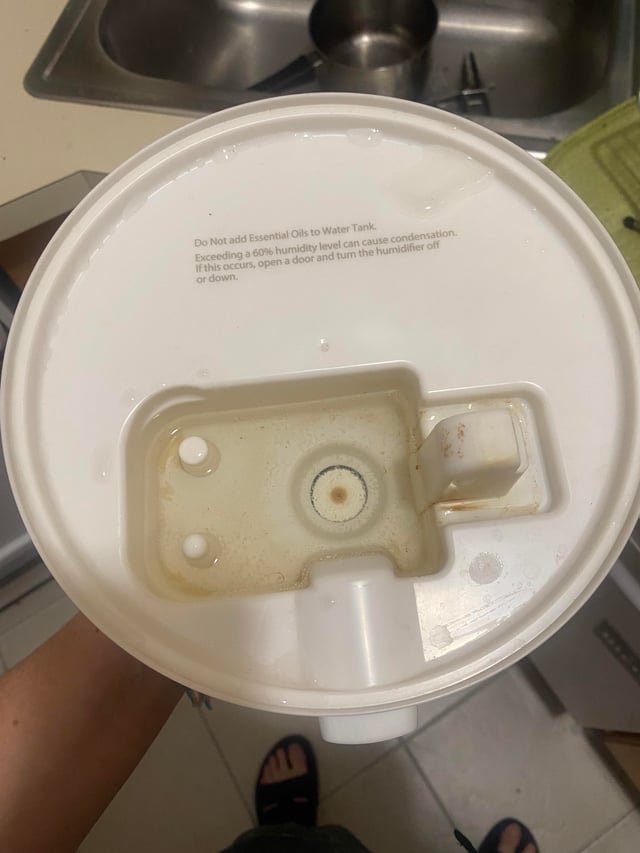
Most Vicks warm mist humidifiers have a small medicine cup or scent pad tray for VapoPads. Remove the used VapoPad after every use — spent pads left in the tray can leave sticky residue. Rinse the medicine cup with warm water and a drop of dish soap after each pad use. Dry completely before inserting a new pad. Never put the medicine cup in the dishwasher — it can warp.
How Often to Clean Your Vicks Humidifier
| Task | Frequency |
|---|---|
| Empty and rinse tank | Daily |
| Wipe base dry | Daily |
| Vinegar descale (tank and base) | Every 3 days to weekly |
| Bleach disinfection | Weekly |
| Replace wick filter (if applicable) | Every 30–60 days |
Pro Tips
- Use distilled water: Tap water mineral content is the primary cause of white dust and scale buildup in humidifiers. Distilled water nearly eliminates both problems.
- Don’t run to empty: Refill the tank before it runs completely dry — running the heating element without water accelerates mineral deposits on the heating plate.
- Clean the cord: Wipe the exterior of the humidifier and the cord with a barely damp cloth monthly. Dust accumulates on the unit and can be inhaled.
Frequently Asked Questions
How often should I clean my Vicks humidifier?
Rinse the tank daily. Do a vinegar descale every three days during active use. Run a bleach disinfection weekly. If you’re running the humidifier continuously through cold and flu season, sticking to this schedule prevents the unit from becoming a source of airborne bacteria or mold.
Can I put the Vicks humidifier tank in the dishwasher?
No — dishwashers use high heat that can warp the plastic tank. Clean it by hand using the vinegar and bleach methods described above.
Why is there pink or red slime in my humidifier?
Pink or reddish biofilm is a common bacteria called Serratia marcescens, often confused with mold. It thrives in standing water. Use the bleach disinfection method described above to eliminate it, and resume daily tank emptying and rinsing to prevent recurrence.
My Vicks humidifier has white buildup on the heating plate. How do I remove it?
This is mineral scale from hard water. Pour undiluted white vinegar directly onto the heating plate and let it soak for 20–30 minutes. Use a soft brush to gently scrub the loosened scale. Repeat if needed. Never use abrasive scrubbers — they scratch the heating plate surface.
Can I use apple cider vinegar instead of white vinegar?
Stick with white distilled vinegar. Apple cider vinegar contains organic compounds that can leave residue and promote bacterial growth inside the tank. White distilled vinegar is the correct choice for humidifier cleaning.
Conclusion
A clean Vicks humidifier runs more efficiently and keeps the air genuinely healthier — a dirty one does the opposite. The routine is simple: empty and rinse daily, vinegar descale every few days, bleach disinfect weekly. That schedule takes minutes per session and prevents the buildup problems that shorten humidifier life. For a related maintenance task, check out our guide on how to clean a humidifier filter — particularly relevant if your model uses an evaporative wick filter that needs separate care.
