
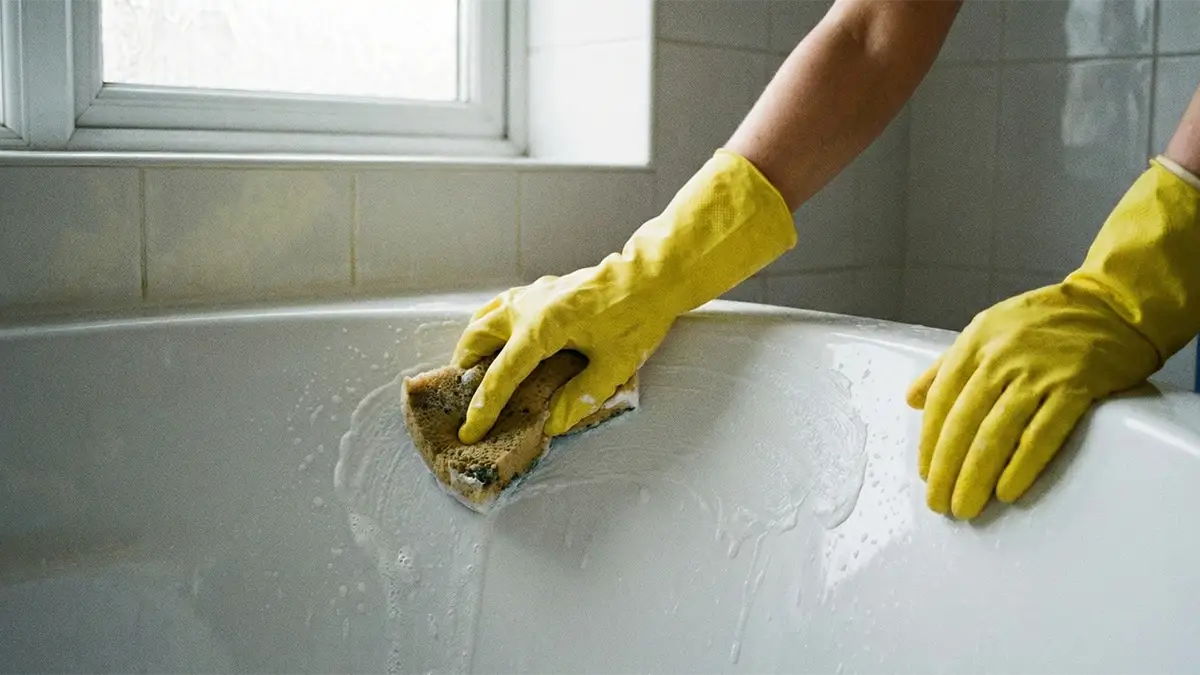
To clean a porcelain tub, begin by rinsing it with warm water to loosen surface dirt. Apply a mild, non-abrasive cleaner such as dish soap or a baking soda paste, then gently scrub with a soft sponge or cloth. Focus on any visible stains, rinse thoroughly with clean water, and finally, dry the tub completely to prevent water spots and maintain its luster. Always avoid harsh chemicals or abrasive tools that can damage the delicate porcelain finish.
- Always prioritize safety by ensuring good ventilation and wearing protective gloves.
- Use only mild, non-abrasive cleaners like dish soap, baking soda, or white vinegar.
- Gently scrub with soft sponges or cloths to avoid scratching the porcelain.
- Rinse thoroughly after cleaning to remove all cleaner residue.
- Dry the tub completely to prevent water spots and soap scum buildup.
- Address stubborn stains with targeted, gentle treatments like baking soda paste or lemon juice.
If you have a cast iron tub or an enamel bathtub, similar gentle cleaning principles apply, though each material has unique care requirements.
Safety First: Essential Precautions
Before you begin cleaning your porcelain tub, it’s crucial to prioritize safety. Working with cleaning agents, even mild ones, requires proper precautions to protect yourself and your tub. Always ensure adequate ventilation in your bathroom by opening windows or turning on the exhaust fan.
Wearing rubber gloves is highly recommended to protect your hands from cleaning solutions and prolonged exposure to water. If using any commercial cleaners, always read and follow the manufacturer’s instructions carefully. Never mix different cleaning products, especially those containing bleach and ammonia, as this can create dangerous fumes.
Gather Your Cleaning Arsenal
Having the right tools and materials on hand makes the cleaning process much smoother and more effective. For a porcelain tub, the key is to choose gentle, non-abrasive items that won’t scratch or dull the surface. Avoid anything harsh that could compromise the delicate finish.
Supplies Checklist:
- Mild Dish Soap: A gentle degreaser for general cleaning.
- Baking Soda: A natural abrasive and deodorizer, excellent for pastes.
- White Vinegar: Effective for cutting through soap scum and mildew.
- Soft Sponges or Microfiber Cloths: Essential for gentle scrubbing.
- Soft-Bristled Brush: Useful for grout lines or textured areas, but ensure it’s gentle enough for porcelain.
- Spray Bottle: Handy for diluting vinegar or other liquid cleaners.
- Clean Towels: For drying the tub after rinsing.
- Rubber Gloves: For hand protection.
For a broader overview of keeping your entire bathroom spotless, see our guide on how to clean a bathroom effectively.
How to Clean A Porcelain Tub: A Step-by-Step Method
Cleaning your porcelain tub effectively involves a systematic approach that ensures thoroughness without damaging the surface. Follow these steps for a sparkling clean finish that preserves the integrity of your tub.
Step 1: Prepare the Tub
Start by removing all items from the tub, such as bath toys, bottles, and bath mats. Give the entire tub a quick rinse with warm water. This helps to loosen any loose dirt, hair, and soap residue, making the subsequent cleaning steps more effective.
Step 2: Apply Your Chosen Cleaner
For general cleaning, you have a few safe options. You can squirt a generous amount of mild dish soap directly onto a wet sponge or cloth. Alternatively, sprinkle baking soda liberally over the entire wet surface of the tub. For a more powerful, natural cleaner, mix equal parts white vinegar and water in a spray bottle and spray the tub thoroughly.
Step 3: Gentle Scrubbing
Using your soft sponge or microfiber cloth, gently scrub the entire surface of the tub. Work in small circular motions, paying extra attention to areas with visible dirt, soap scum, or grime. If you used baking soda, you can form a paste with a little water and let it sit on tougher spots for a few minutes before scrubbing. Avoid abrasive scrubbers like steel wool or harsh scouring pads, as these will scratch the porcelain.
Step 4: Address the Faucet and Fixtures
While the cleaner is working on the tub, take a moment to clean the faucet, handles, and drain cover. Use the same mild cleaner and a soft cloth to wipe away water spots and grime. For hard-to-reach areas around the faucet base, a soft-bristled brush can be helpful, ensuring it’s gentle enough not to scratch the chrome or porcelain.
Step 5: Rinse Thoroughly
Once you’ve scrubbed the entire tub, rinse it thoroughly with clean, warm water. Ensure all traces of the cleaning solution are washed away. Any leftover residue can attract dirt faster or leave a dull film on the surface. You can use a showerhead or a bucket of water for this step.
Step 6: Dry for a Spotless Finish
After rinsing, use a clean, dry towel or microfiber cloth to wipe down the entire tub surface. Drying prevents water spots, especially in areas with hard water, and leaves your porcelain tub gleaming. This final step is crucial for achieving a truly sparkling and streak-free finish.
Tackling Stubborn Stains and Issues
Even with regular cleaning, porcelain tubs can sometimes develop stubborn stains or issues that require a bit more attention. Knowing how to address these specific problems gently can restore your tub’s pristine appearance without causing damage.
Removing Rust Stains
Rust stains often appear around leaky faucets or metal items left in the tub. To tackle them, create a paste using baking soda and a small amount of lemon juice or white vinegar. Apply the paste directly to the rust stain, let it sit for 30-60 minutes, then gently scrub with a soft sponge. Rinse thoroughly. For very tough rust, a specialized rust remover designed for porcelain (always check the label) can be used, but test it in an inconspicuous area first.
For more severe bathtub staining issues, our comprehensive guide on how to clean tough stains from a bathtub offers deeper solutions.
Dealing with Mildew and Mold
Mildew and mold thrive in damp environments. For light mildew, a spray of undiluted white vinegar left to sit for 15-30 minutes before scrubbing can be very effective. For more persistent mold, a baking soda paste applied and scrubbed can help. Ensure good ventilation when dealing with these issues to prevent respiratory irritation.
For more extensive mold issues beyond the tub surface, check our dedicated guide on how to remove bathroom mold effectively.
Erasing Scuff Marks
Scuff marks, often from shoes or dropped items, can sometimes appear on porcelain. A paste made from baking soda and a little water can often buff these out. Apply the paste to the scuff, gently rub with a soft cloth, and then rinse. The mild abrasive quality of baking soda helps to lift the mark without scratching the finish.
Maintaining Your Porcelain Tub’s Luster
Regular maintenance is key to keeping your porcelain tub looking new and preventing the buildup of dirt and stains. A little effort consistently can save you from intensive cleaning sessions down the line. Maintaining your tub also pairs well with cleaning your shower tile and cleaning shower grout as part of your overall bathroom upkeep.
- Wipe Down After Each Use: A quick wipe with a soft cloth after each bath or shower helps prevent water spots and soap scum from forming.
- Regular Gentle Cleaning: Aim for a thorough cleaning once a week using mild cleaners like dish soap or vinegar. This prevents grime from becoming embedded.
- Avoid Harsh Cleaners: Steer clear of abrasive powders, steel wool, and strong chemical cleaners (like those containing bleach or ammonia) unless absolutely necessary and specifically formulated for porcelain. These can dull the finish or cause permanent damage.
- Use a Bath Mat: A non-slip bath mat can protect the tub’s surface from scratches and scuffs, especially if you have children or pets using the tub.
- Fix Leaks Promptly: Dripping faucets can lead to rust stains. Address any plumbing leaks as soon as they occur to prevent future staining.
- Clean Spills Immediately: If you spill hair dye, nail polish, or other staining substances, clean them up immediately before they have a chance to set into the porcelain.
Quick Cleaning Checklist
For those times when you need a fast refresh or a reminder of the essential steps, this checklist provides a concise overview of how to clean a porcelain tub effectively and safely.
- Clear the tub of all items.
- Rinse the tub with warm water.
- Apply a mild cleaner (dish soap, baking soda paste, or vinegar spray).
- Gently scrub all surfaces with a soft sponge or cloth.
- Clean fixtures and faucet.
- Rinse the entire tub thoroughly with clean water.
- Dry the tub completely with a clean towel.
When to Call a Professional
Don’t forget that regular drain maintenance is also essential for a well-functioning tub. Our guide on how to remove a tub drain stopper can help you tackle clogs. While many porcelain tub issues can be resolved with DIY cleaning methods, there are instances when professional help is the best course of action. Knowing when to call an expert can prevent further damage and ensure your tub is properly cared for.
If your porcelain tub has deep chips, cracks, or significant surface damage that goes beyond superficial scratches, a professional can often repair or resurface it. Similarly, if you’ve tried all recommended methods and still can’t remove persistent, deeply set stains, a professional cleaning or restoration service might have specialized tools and techniques that are safe for porcelain.
Professionals can also assess the overall condition of your tub and recommend appropriate long-term solutions, such as reglazing or refinishing, which can extend the life and beauty of your porcelain fixture. Attempting complex repairs or using harsh, untested chemicals yourself can often lead to irreversible damage, making professional intervention a wiser choice.
Frequently Asked Questions About Porcelain Tub Care
How often should I clean my porcelain tub?
For optimal hygiene and to prevent buildup, it’s recommended to give your porcelain tub a light cleaning once a week. A more thorough cleaning, focusing on any specific stains or grime, can be done every two to four weeks, depending on usage.
What cleaners are safe for porcelain tubs?
Safe cleaners for porcelain tubs include mild dish soap, baking soda, and white vinegar. These options are non-abrasive and effective at removing common dirt, soap scum, and mildew without damaging the delicate enamel surface.
Can I use bleach to clean a porcelain tub?
While diluted bleach can sometimes be used sparingly for very tough stains or mildew, it’s generally not recommended for regular use on porcelain tubs. Bleach can be harsh, potentially dulling the finish or causing discoloration over time, especially if not rinsed thoroughly.
How do I remove rust stains from a porcelain tub?
To remove rust stains, create a paste with baking soda and lemon juice or white vinegar. Apply it to the stain, let it sit for 30-60 minutes, then gently scrub with a soft sponge and rinse. Specialized rust removers for porcelain can also be used, but always test them first.
What causes yellowing in a porcelain tub?
Yellowing in a porcelain tub can be caused by hard water deposits, prolonged exposure to certain chemicals (like hair dyes), or the natural aging of the porcelain enamel. Regular cleaning and prompt stain removal can help prevent or reduce yellowing.
Is it possible to repair chips in a porcelain tub?
Yes, minor chips in a porcelain tub can often be repaired using a porcelain repair kit, available at most hardware stores. For larger or more extensive damage, it’s advisable to consult a professional for a seamless and durable repair or resurfacing.
Conclusion
If your bathroom also suffers from mineral deposits on glass surfaces, our guide on removing hard water stains from shower doors can help. Keeping your porcelain tub clean and gleaming is a straightforward task when you use the right methods and products. By prioritizing safety, opting for mild, non-abrasive cleaners, and following a consistent cleaning routine, you can effectively tackle dirt, soap scum, and even stubborn stains. Regular maintenance not only preserves the beauty of your tub but also extends its lifespan, ensuring it remains a sparkling centerpiece of your bathroom for years to come. Embrace these simple steps to enjoy a consistently fresh and inviting bathing space.
