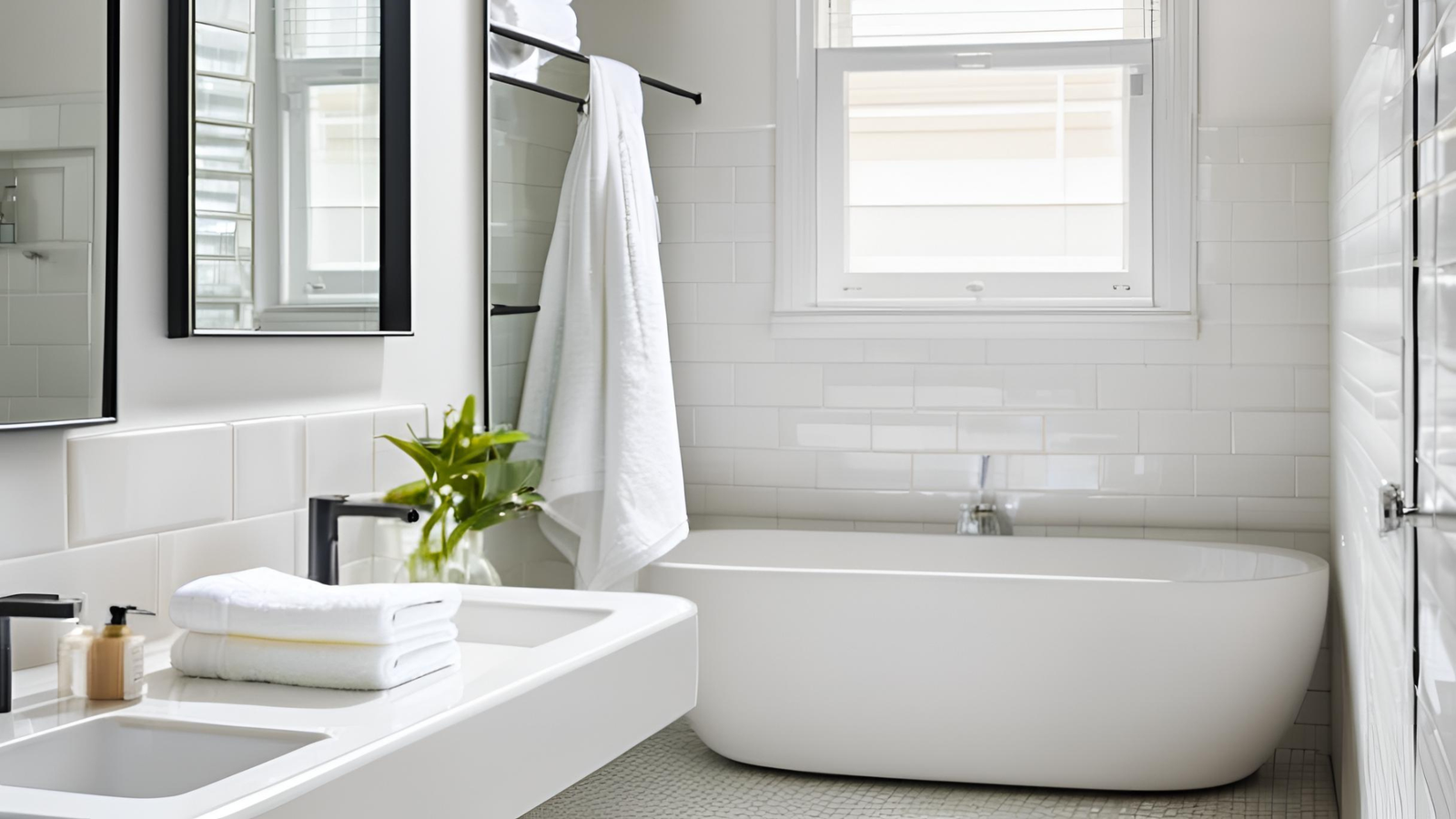
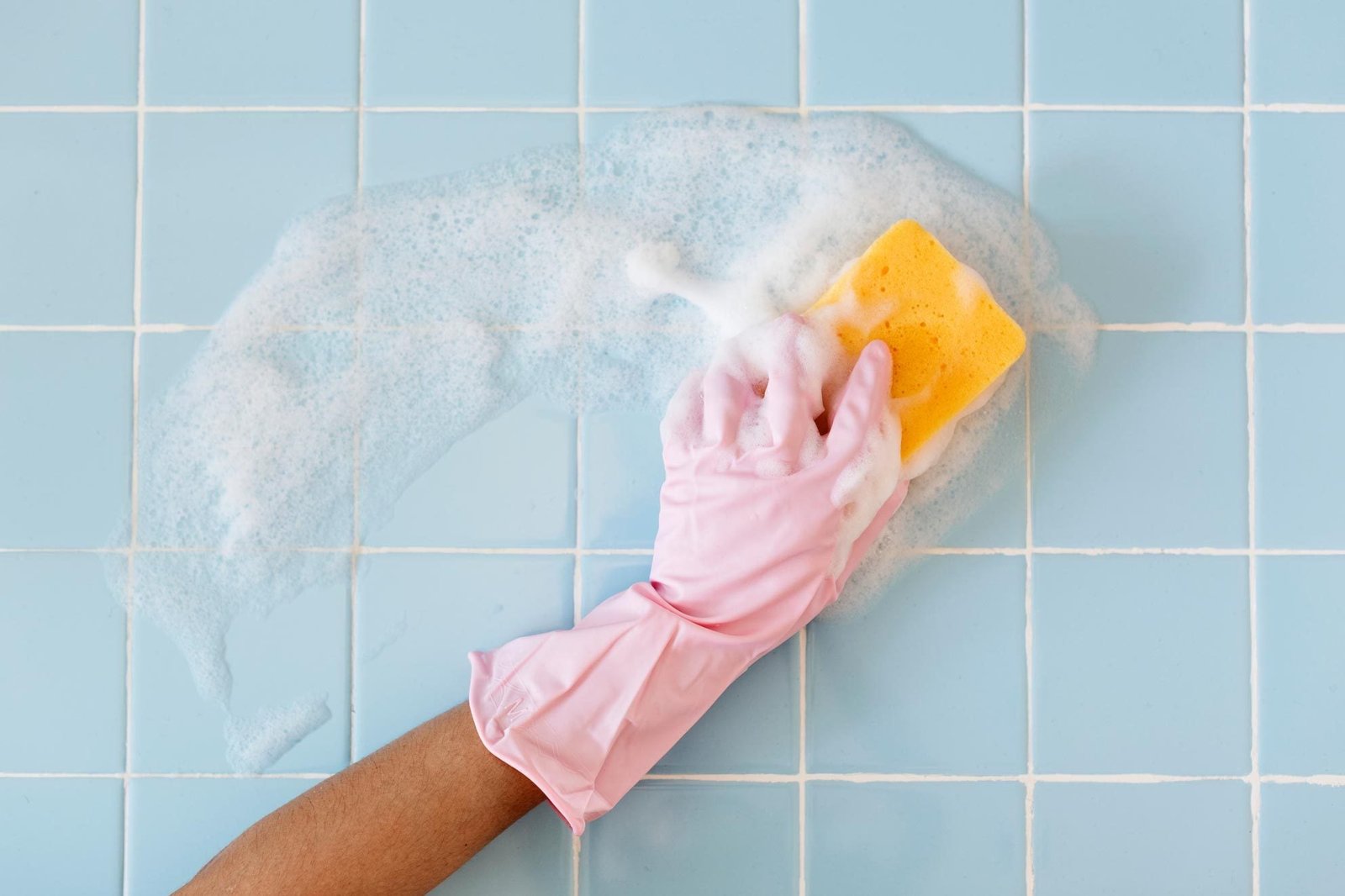
Cleaning a bathroom the right way takes 20–45 minutes when you have a system. Start from the top and work down, clean dry surfaces before wet ones, and always finish with the floor last. This guide walks you through every surface — toilet, sink, tub, shower, mirror, and floor — with the exact products and order that pros use to get it done fast without missing anything.
What You’ll Need
Tools
Cleaning Products
Toilet brush
Toilet bowl cleaner
Scrub sponge (non-scratch)
All-purpose bathroom cleaner spray
Microfiber cloths (at least 3)
Glass cleaner or white vinegar
Grout brush or old toothbrush
Disinfectant spray
Mop or flat mop
Baking soda (for scrubbing)
Rubber gloves
Dish soap or castile soap
Spray bottle
Hydrogen peroxide (optional, for mold)
Safety & Precautions
Never mix bleach and ammonia. This creates toxic chloramine gas. Check your product labels — many multi-surface cleaners contain ammonia.
Never mix bleach and vinegar. Also produces harmful chlorine gas. Use one or the other, never together.
Ventilate the room. Open the window or run the exhaust fan the entire time you’re cleaning. Fumes from cleaners build up fast in small spaces.
Wear rubber gloves. Toilet bowl cleaners, bleach-based sprays, and grout cleaners are hard on skin with repeated exposure.
Let cleaners dwell. Most disinfectants need 30–60 seconds of contact time to actually kill bacteria — spraying and immediately wiping off is not disinfecting.
How to Clean a Bathroom: Step-by-Step
Step 1 — Declutter and Remove Items
Before you spray a single thing, remove everything from the countertop, shower caddy, and toilet tank top. Shake out bath mats and take them outside or toss them in the laundry. This step alone saves 10 minutes of working around objects and ensures you don’t miss any surface. Put the toilet brush holder in the tub to clean later.
Step 2 — Apply Toilet Bowl Cleaner First (Let It Soak)
Squirt toilet bowl cleaner under the rim of the bowl so it coats the inside and runs down. Let it sit while you clean everything else — this gives it time to break down mineral deposits and kill bacteria without scrubbing. This is the most important time-saving move in bathroom cleaning. Don’t scrub yet.
Step 3 — Dust and Wipe Down High Surfaces
Work top-down. Use a dry microfiber cloth or duster to hit: light fixtures, exhaust fan grille, top of the mirror frame, tops of cabinets, and any shelving. Dust falls down, so always clean upper surfaces first. If the exhaust fan cover is caked with lint, remove it and wash in warm soapy water — a clogged fan is a major cause of bathroom mold.
Step 4 — Spray and Clean the Sink and Countertop
Spray the countertop, faucet, and sink basin with all-purpose cleaner. Let it sit for 30 seconds. Scrub the faucet and handles with an old toothbrush (mineral deposits love to hide around the base of faucets). Wipe the countertop with a microfiber cloth using circular motions, then wipe out the sink basin. For hard water deposits on the faucet, wrap a vinegar-soaked cloth around it for 5 minutes and wipe clean. Finish by buffing the faucet dry to prevent water spots.
Step 5 — Clean the Mirror
Spray glass cleaner directly on the mirror and wipe with a clean, dry microfiber cloth in an S-pattern from top to bottom — not in circles, which leaves streaks. If you don’t have glass cleaner, white vinegar in a spray bottle works just as well and leaves no residue. Buff any remaining streaks with a dry section of the cloth.
Step 6 — Clean the Shower or Tub
Spray all shower walls, the tub, faucet, and shower door with bathroom cleaner. For fiberglass or acrylic surfaces, use a non-scratch scrub pad — never steel wool. Let the cleaner dwell for 1–2 minutes. Scrub walls with a sponge starting at the top, working down to the tub floor. Pay special attention to grout lines and the floor of the tub where soap scum accumulates. For stubborn soap scum, a paste of baking soda and dish soap applied with a brush and left for 5 minutes cuts through it without scratching. Rinse thoroughly with the showerhead. For mold in grout, see our guide on how to clean black mold in a shower.
Step 7 — Clean the Toilet
Now that your toilet bowl cleaner has been soaking, it’s time to tackle the toilet. Spray the outside of the toilet — lid top, lid underside, seat top, seat underside, tank, and base — with disinfectant spray. Wipe from the cleanest areas first: tank, then lid top, then lid underside, then seat top, then seat underside, then the rim, then the outside of the bowl, then the base. Use a fresh section of your cloth for each area. Finally, scrub the inside of the bowl with the toilet brush, working under the rim especially. Flush to rinse. Replace the toilet brush holder after rinsing it in the tub.
Step 8 — Wipe Down Cabinet Fronts and Hardware
Spray a light coat of all-purpose cleaner on cabinet doors and drawer fronts. Wipe with a microfiber cloth. Buff the hardware (drawer pulls, door knobs) dry so they don’t develop water spots. Don’t forget the inside of cabinet doors under the sink — toothpaste drips and spills accumulate there.
Step 9 — Mop the Floor
The floor is always last. Sweep or vacuum to remove hair and dust first — mopping over loose debris just spreads it around. Mix your floor cleaner with warm water per the product instructions, or use a 1:10 bleach-to-water solution for tile (test on a hidden spot first). Mop from the far corner toward the door. Let the floor dry fully before walking on it or replacing bath mats.
Step 10 — Replace Items and Refresh Towels
Replace fresh towels, hang or shake out clean bath mats, and put back counter items. Empty the trash can if needed. A small bowl of baking soda or a bamboo charcoal deodorizer left near the toilet will keep the bathroom smelling fresh between cleanings.
Pro Tips to Clean a Bathroom Faster
Use the “apply and walk away” method. Apply all your cleaners first (toilet bowl cleaner, shower spray, sink spray), then go back and wipe — this is how professional cleaners cut 20+ minutes off their time.
Keep a daily spray in the shower. A daily shower spray applied after each use prevents soap scum from ever building up, which means your weekly scrub takes a fraction of the effort.
Squeegee the shower walls after every use. This single habit reduces soap scum and hard water deposits by 75% and prevents mold in grout.
Line the trash can before cleaning. Changing the trash bag is part of the cleaning process — do it while you already have gloves on.
Microfiber over paper towels every time. Microfiber cloths actually lift bacteria off surfaces instead of just smearing them around, and they leave no lint on mirrors.
Troubleshooting Common Bathroom Cleaning Problems
Pink Stains in the Toilet or Shower
That pink tint is Serratia marcescens bacteria — it thrives in wet, humid environments and feeds on soap residue. Spray with hydrogen peroxide, scrub, and rinse. To prevent it, dry the surfaces after use and clean weekly. It is not mold, but it can cause respiratory irritation.
Hard Water Stains on Faucets and Shower Doors
White vinegar is your best weapon — it dissolves calcium and mineral deposits. For stubborn buildup, soak a cloth in white vinegar and leave it on the surface for 15–30 minutes before scrubbing. See our full guide on how to remove hard water stains from shower doors.
Bathroom Still Smells After Cleaning
Odors after cleaning usually come from hidden spots: under the toilet rim, grout lines with trapped bacteria, or a floor drain that needs flushing. Pour a cup of white vinegar down the drain, let it sit 15 minutes, then flush with hot water. Also check the base of the toilet where it meets the floor — wax ring failure causes persistent odors.
Frequently Asked Questions
How often should you deep clean a bathroom?
For a household of 2–4 people, a full deep clean once a week is standard. High-traffic bathrooms may need twice-weekly attention. Between full cleans, a daily wipe-down of the sink and toilet with a disinfectant wipe takes 2 minutes and keeps things sanitary.
What should I clean first in a bathroom?
Always apply toilet bowl cleaner first so it can soak while you clean everything else. Then work top-down: dust high surfaces, then mirror, then sink/countertop, then shower/tub, then toilet exterior, then floor. This order prevents you from dripping cleaner on already-clean surfaces below.
Can I use the same cloth to clean the toilet and sink?
Never. The toilet is the highest-germ surface in the bathroom. Use a dedicated cloth or paper towels for the toilet that you either discard or launder separately. Color-coding your cleaning cloths (red for toilet, blue for sink, green for shower) is the system professional cleaners use.
What’s the best all-purpose bathroom cleaner?
For most surfaces, a spray cleaner that is both cleaning and disinfecting saves time — look for EPA-registered disinfectants. Lysol Bathroom Cleaner, Method Bathroom Spray, and Scrubbing Bubbles are reliable choices. For a natural option, a mix of white vinegar and a few drops of dish soap in a spray bottle handles soap scum and grime on most surfaces.
How do I keep grout clean in the bathroom?
Grout is porous and stains easily. Sealing grout once a year with a penetrating grout sealer is the most effective prevention. For cleaning dirty grout, check our guide on how to clean grout in the shower — the same methods apply to floor grout too.
Conclusion
A clean bathroom doesn’t require expensive products or hours of scrubbing — it requires a system. Apply cleaners early, work top to bottom, save the floor for last, and let your products do the heavy lifting with proper dwell time. Once you’ve run through this process a few times, the whole job becomes muscle memory and takes under 30 minutes.Next Step: Now that the bathroom is spotless, tackle the grout with our guide on How to Clean Grout in the Shower, or learn How to Clean Bathroom Tile for tips specific to your tile type.
{
“@context”: “https://schema.org”,
“@type”: “HowTo”,
“name”: “How to Clean a Bathroom”,
“description”: “A complete room-by-room step-by-step guide to cleaning a bathroom efficiently, including toilet, sink, shower, tub, mirror, and floor.”,
“totalTime”: “PT45M”,
“estimatedCost”: {
“@type”: “MonetaryAmount”,
“currency”: “USD”,
“value”: “15-30”
},
“tool”: [
{“@type”: “HowToTool”, “name”: “Toilet brush”},
{“@type”: “HowToTool”, “name”: “Microfiber cloths”},
{“@type”: “HowToTool”, “name”: “Scrub sponge”},
{“@type”: “HowToTool”, “name”: “Mop”},
{“@type”: “HowToTool”, “name”: “Grout brush”}
],
“supply”: [
{“@type”: “HowToSupply”, “name”: “Toilet bowl cleaner”},
{“@type”: “HowToSupply”, “name”: “All-purpose bathroom cleaner”},
{“@type”: “HowToSupply”, “name”: “Glass cleaner”},
{“@type”: “HowToSupply”, “name”: “Disinfectant spray”},
{“@type”: “HowToSupply”, “name”: “Baking soda”}
],
“step”: [
{“@type”: “HowToStep”, “name”: “Declutter and remove items”, “text”: “Remove everything from countertops and shower. Take out bath mats.”},
{“@type”: “HowToStep”, “name”: “Apply toilet bowl cleaner first”, “text”: “Apply under the rim and let it soak while you clean everything else.”},
{“@type”: “HowToStep”, “name”: “Dust high surfaces top-down”, “text”: “Dust light fixtures, exhaust fan, mirror frame, and cabinet tops.”},
{“@type”: “HowToStep”, “name”: “Clean sink and countertop”, “text”: “Spray, let dwell 30 seconds, scrub faucet and basin, wipe dry.”},
{“@type”: “HowToStep”, “name”: “Clean the mirror”, “text”: “Spray glass cleaner, wipe in S-pattern with microfiber cloth.”},
{“@type”: “HowToStep”, “name”: “Clean shower and tub”, “text”: “Spray surfaces, let dwell, scrub walls and floor, rinse thoroughly.”},
{“@type”: “HowToStep”, “name”: “Clean the toilet”, “text”: “Disinfect exterior surfaces top-down, then scrub inside of bowl.”},
{“@type”: “HowToStep”, “name”: “Wipe cabinet fronts”, “text”: “Clean cabinet doors, drawer fronts, and hardware.”},
{“@type”: “HowToStep”, “name”: “Mop the floor”, “text”: “Sweep first, then mop from far corner to door. Let dry fully.”},
{“@type”: “HowToStep”, “name”: “Replace items and refresh”, “text”: “Replace fresh towels, replace bath mats, empty trash.”}
]
}
About the Author
I'm Steve Davila, founder of GuideGrove. I started this site after years of running into home cleaning and DIY guides that skipped the important steps or assumed too much. Every guide here is written the way I wished I'd found it — with the full process, the common mistakes, and the details that actually make the difference.