
What Hydrogen Peroxide Does
Hydrogen peroxide (H2O2) is an oxidizer — it breaks chemical bonds in organic compounds. This makes it effective at killing microorganisms (bacteria, viruses, mold, fungi), breaking down stains, and whitening porous surfaces. When it works, it breaks down into water and oxygen — no toxic residue. The 3% solution available at pharmacies is safe for home use. Concentrations above 3% require more careful handling.
Safety and Precautions
Never mix hydrogen peroxide with vinegar in the same bottle or the same application — they react to form peracetic acid, which is corrosive and irritating. You can use them separately on the same surface (apply one, rinse, then apply the other). Don’t use hydrogen peroxide on marble, granite, or other natural stone — it bleaches and etches the surface. Store in a dark container — light degrades hydrogen peroxide to plain water quickly. Test on colored fabric before using — it has a mild bleaching effect. See our complete cleaning products safety guide.
12 Hydrogen Peroxide Cleaning Uses
1. Disinfecting Kitchen and Bathroom Counters
Spray 3% hydrogen peroxide directly on counters (except natural stone). Let sit for 1–3 minutes for disinfection. Wipe with a clean cloth. No rinsing required for most surfaces — it breaks down to water. This is particularly effective for food prep surfaces where you don’t want chemical residue.
2. Whitening Grout
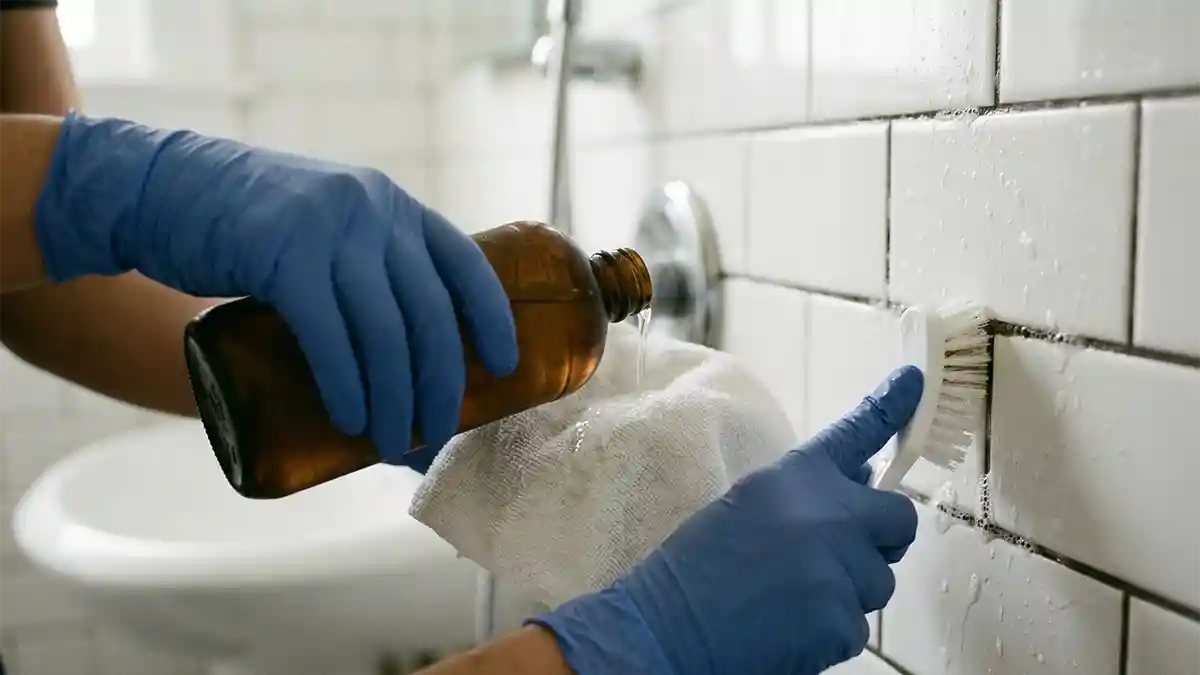
Apply hydrogen peroxide directly to discolored grout lines using a spray bottle or an old toothbrush dipped in peroxide. Let sit 10 minutes, then scrub with the toothbrush and rinse. For yellow or heavily stained grout, make a paste of hydrogen peroxide and baking soda, apply, let sit 20 minutes, scrub, and rinse. This combination lifts organic staining from grout without bleach.
3. Killing Mold and Mildew
Spray undiluted 3% hydrogen peroxide on mold-affected surfaces (bathroom caulk, tile grout, under sinks). Let sit for 10 minutes — the peroxide penetrates and kills mold cells. Wipe or scrub, then rinse. More effective than vinegar for mold kill rate on non-porous surfaces, and safer than bleach for ventilated use. For comprehensive mold treatment, see our mildew removal guide.
4. Removing Stains from Cutting Boards
Spray hydrogen peroxide onto a wooden or plastic cutting board, let sit 5 minutes, then rinse. This disinfects and reduces food staining simultaneously. For stubborn stains, sprinkle baking soda on the board, add hydrogen peroxide, let fizz, then scrub and rinse.
5. Removing Blood Stains
Apply 3% hydrogen peroxide directly to fresh or dried blood stains on light-colored fabric. The fizzing action breaks down blood proteins. Let sit 5 minutes, blot (don’t rub), rinse with cold water. Highly effective on white fabric. Test on colored fabric first. For complete blood stain guidance, see our blood stain removal guide.
6. Whitening Toilet Bowls
Pour ½ cup of hydrogen peroxide into the toilet bowl, let sit 30 minutes, then scrub and flush. Disinfects and lightens organic staining. For mineral buildup (rust, calcium), use a dedicated toilet bowl cleaner — hydrogen peroxide is effective for organic staining but less so for mineral deposits.
7. Cleaning and Freshening Sponges and Dishcloths
Soak sponges and dishcloths in undiluted hydrogen peroxide for 10 minutes, then rinse. This kills bacteria inside the sponge that even microwave sanitizing can miss in tightly compressed areas. Do this weekly for sponges in active kitchen use.
8. Removing Deodorant Stains from Shirts
Mix 1 part dish soap with 2 parts hydrogen peroxide. Apply to the deodorant stain, let sit 1 hour, then launder in cold water. Deodorant stains are a combination of aluminum deposits and fabric protein — hydrogen peroxide breaks down the protein component while dish soap handles the residue.
9. Sanitizing Toothbrushes
Soak toothbrushes in hydrogen peroxide for 10 minutes weekly to kill accumulated bacteria and viruses. Rinse thoroughly before use. This is particularly valuable after illness to prevent reinfection.
10. Cleaning and Brightening Produce
Mix a cap of hydrogen peroxide into a bowl of cold water and soak produce for 2–3 minutes. Rinse well. This reduces pesticide residue and surface bacteria on fruits and vegetables — particularly useful for items eaten without peeling (strawberries, grapes, apples).
11. Removing Wine and Juice Stains
Apply hydrogen peroxide directly to wine, juice, or berry stains on light-colored fabric. Let fizz, blot with a clean cloth, rinse with cold water. Works best combined with dish soap — apply soap first, let sit, then apply peroxide for the best stain removal result. See our full wine stain guide.
12. Cleaning and Whitening Grout After Sealing
Before re-sealing tile grout, a hydrogen peroxide treatment ensures the grout is as clean as possible, which maximizes how well the sealer bonds and how long it lasts. Clean and whiten with the baking soda paste method above, rinse completely, and allow full drying before applying grout sealer.
What Hydrogen Peroxide Should NOT Be Used On
- Natural stone (marble, granite, limestone): Etches and bleaches the surface permanently
- Colored fabrics: Can bleach — always test in inconspicuous spot first
- Copper and brass: Darkens and discolors these metals
- Acrylic and some plastics: Can cloud or discolor certain plastics with extended contact
- Mixed with vinegar: Forms peracetic acid — irritating and corrosive
Frequently Asked Questions
Is 3% hydrogen peroxide safe to use around children and pets?
Yes — 3% hydrogen peroxide breaks down quickly to water and oxygen, leaving no toxic chemical residue on surfaces. It’s one of the safest disinfectants for homes with children and pets, particularly compared to quats (quaternary ammonium compounds) found in many commercial disinfectants that leave an active chemical film. Let it fully dry before allowing children or pets on treated surfaces.
How long does hydrogen peroxide need to sit to disinfect?
For effective disinfection, 3% hydrogen peroxide needs 1–3 minutes of contact time on a clean surface. Cleaning the surface first is important — organic material (grease, dirt) deactivates hydrogen peroxide before it can kill bacteria. Clean first, then disinfect for maximum effectiveness.
Can hydrogen peroxide replace bleach?
For most home cleaning purposes, yes — hydrogen peroxide disinfects, whitens, and removes organic stains without bleach’s respiratory irritation risk and without leaving chlorine residue. For industrial-level disinfection of known pathogens (C. difficile spores, for example), bleach is more effective at standard dilutions, but 3% peroxide handles all routine household pathogen control effectively.
Does hydrogen peroxide kill mold?
Yes — 3% hydrogen peroxide kills mold on contact on non-porous surfaces (tile, grout, sealed counters). It penetrates the cellular structure of mold. For porous surfaces (wood, drywall), peroxide is less effective at penetrating below the surface — these require professional remediation for significant mold problems.
How should hydrogen peroxide be stored?
Store in the original dark brown bottle, away from light and heat. Exposure to light rapidly degrades hydrogen peroxide to water. Don’t transfer to a clear spray bottle for long-term storage — it will lose potency quickly. Buy 3% solution in appropriate quantities rather than large bottles that will degrade before use.
Conclusion
Hydrogen peroxide at 3% is one of the most cost-effective and safe multi-purpose cleaning agents available. A single $1 bottle handles disinfecting, grout whitening, stain removal, mold control, and more. The key to effective use is dwell time — let it work before wiping. Combine with our broader guide to toxic-free cleaning for a comprehensive approach to cleaning with safer ingredients throughout your home.
